How to Attach a Headboard Safely: Smart Ways to Transform Your Bedroom Setup

How to Attach a Headboard Safely Without Damaging Your Bed Frame
A headboard can instantly upgrade a bedroom, but the installation process is where many homeowners and renters run into trouble. Decorative headboards, upholstered panels, wood and metal frames, and modern bedroom furniture systems often arrive with mismatched holes, missing hardware, confusing instructions, or heavy components that are difficult to handle safely. What looks like a simple finishing touch can quickly become a frustrating furniture problem.
When the setup is done incorrectly, the risks grow fast. A loose headboard can wobble every time the bed moves, bolts can loosen and create noise, and poor mounting can damage the wall or strain the bed frame itself. In some cases, rushed assembly leads to scratched finishes, bent brackets, or attachment points that never feel secure again.
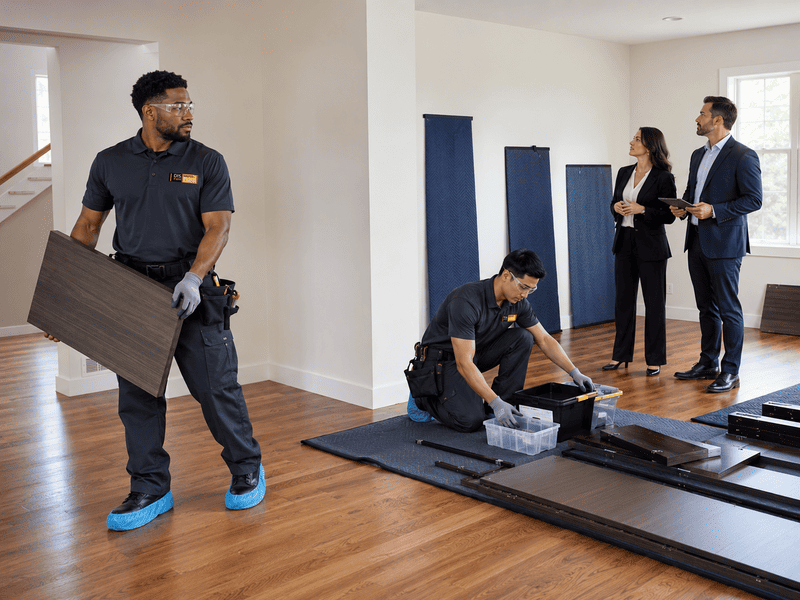
That is why many customers choose Dismantle Furniture for headboard installation, disassembly, and reassembly. Their team helps homeowners, renters, movers, and property managers complete bedroom setups correctly and with less stress. Across Maryland, Washington DC, Delaware, Pennsylvania, and Northern Virginia, professional help often saves time, avoids damage, and delivers a bedroom setup that feels stable from the first night.
Why proper headboard setup matters for bed stability and bedroom safety
A properly installed headboard helps the entire bed feel stronger, quieter, and safer to use every day. When the frame, brackets, and fasteners are aligned correctly, the headboard supports the bed instead of pulling against it. That simple difference can prevent wobbling, reduce strain on the frame, and improve overall bedroom safety.
Improper setup usually shows up in small but costly ways. A crooked headboard can shift under pressure, loosen hardware faster, and create constant movement against the frame. Over time, that movement may damage mounting points, scratch walls, or weaken the connection between the bed and the headboard.
This matters even more in finished bedrooms where walls, trim, and flooring can be marked during a poor installation. The same kind of care used in professional wall mounting services also matters when a headboard needs to sit level and secure near painted surfaces.
Long-term stability also depends on proper tightening and follow-up checks. Similar to the routine bolt checks highlighted in spring basketball hoop maintenance, secure hardware helps prevent gradual loosening and unnecessary wear.
Smart ways to set up a bed with a headboard
The smartest headboard setup starts before the first bolt is tightened. Measuring the frame, checking hole spacing, confirming hardware, and planning the bed position in the room can prevent wasted time and expensive mistakes. That early preparation also helps customers decide whether the setup is simple enough for DIY or better handled by a professional.
Before installation begins, it helps to check these details carefully:
- Bed size: Confirm the headboard matches the actual frame size, not just the mattress
- Hole spacing: Measure both the frame and headboard connection points before lifting
- Hardware check: Verify that bolts, washers, brackets, and sleeves are present
- Room placement: Make sure the bed can sit properly near trim, outlets, and nightstands
- Weight handling: Plan for safe lifting if the headboard is large, padded, or solid wood
This preparation is especially important when customers choose popular retail styles. Many designs in Amazon headboard best sellers look straightforward online but use different attachment methods once they arrive. The same issue appears in Wayfair headboard collections, where storage designs, tufted panels, and metal styles can all require different brackets or clearances.
It also comes up with modern options in IKEA headboard lines, especially when the design includes shelving, added depth, or integrated bedroom features.
Why headboard installation must be done correctly
Headboard installation must be done correctly because a bed can look finished without actually being secure. Uneven tightening, the wrong bolt length, or poor bracket alignment can create hidden problems that do not show up until the bed is used regularly. By then, the fix is often more expensive than the original installation.
A proper installation follows a sequence. The headboard should be aligned before pressure is applied, and both sides should be tightened evenly so the frame does not twist. That process may seem small, but it protects the finish, the hardware, and the structural connection.
The same methodical approach used in office furniture assembly projects is useful here too. When assembly happens in the right order, the final result is stronger, cleaner, and less likely to need rework.
Types of headboards that often require professional setup
Not every headboard is equally simple to install. Some pieces are oversized, some are awkward to lift, and others use specialized hardware that leaves little room for error. In those cases, professional setup is often the safer and more efficient option.
Large upholstered headboards, storage-backed designs, wall-mounted pieces, and solid wood panels are some of the most common examples. These styles often require two-person handling, careful alignment, and enough space to move and position the headboard without damaging nearby walls or the bed frame.
That is one reason many examples of professional bed assembly service emphasize more than basic bolt tightening. Hardware match, room layout, and product weight all affect whether the setup will be secure. It is also why broader home furniture assembly support often includes bedroom furniture that looks simple at first but becomes more technical during final positioning and attachment.

Types of Headboards Our Team Can Disassemble and Reassemble
Professional headboard disassembly and reassembly is not a one-method job. Different headboards use different materials, support systems, and mounting points, so the safest process depends on how the piece was built. An experienced team can identify the construction, remove hardware in the correct order, and reinstall the headboard so it sits level and secure again.
Upholstered headboards require a more careful approach because fabric, foam, tufting, and trim can be damaged by uneven pressure or rough handling. Larger padded designs can also create moving challenges in tighter spaces. Oversized styles similar to those found in West Elm bed and headboard collections show why these pieces often need controlled lifting and more planning.
Wooden headboards often appear simple, yet they can split, chip, or loosen if bolts are removed unevenly or if the frame is twisted during dismantling. Some designs also include shelving, trim, or integrated rails that add complexity. The range of styles in Pottery Barn bed and headboard collections reflects how much wood headboard construction can vary from one piece to another.
Metal headboards are usually attached with brackets and bolts, but corrosion, alignment issues, or prior assembly mistakes can make removal harder than expected. Using the right hand tools matters because stripped fasteners and bent brackets can make safe reassembly much more difficult.
Wall-mounted headboards need careful handling around cleats, anchors, and finished wall surfaces. This kind of removal is especially important during bedroom updates, renovations, or apartment moves where preserving the wall matters as much as protecting the headboard itself.
Floor-standing headboards distribute weight differently than frame-mounted models. Their footprint and support base can make them harder to pivot through hallways or position neatly in tighter bedrooms, which is why controlled lifting is so important.
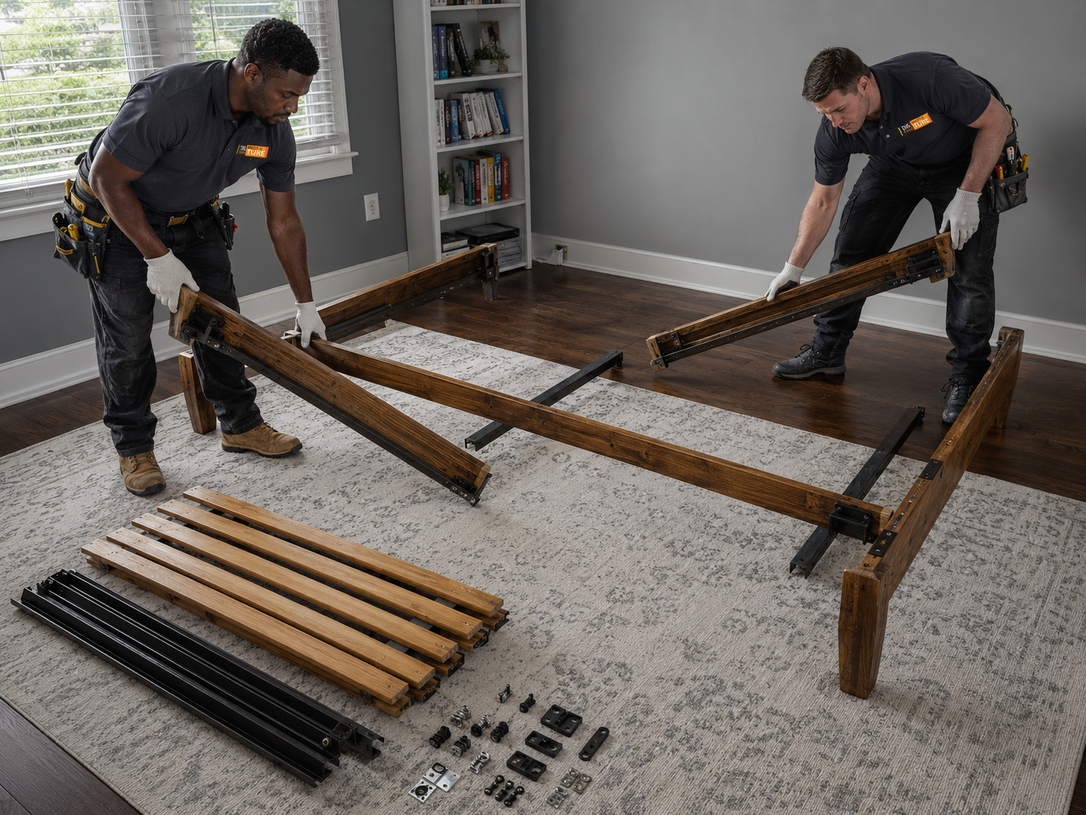
Slatted headboards have multiple connection points and open sections that can loosen or flex if they are carried improperly. During dismantling, the hardware needs to be tracked carefully so each section can be reassembled without gaps or instability.
Strutted headboards often rely on adjustable supports, which means alignment becomes especially important during reassembly. This is even more relevant when an older headboard is being matched to a different frame. Product variations seen in show how different frame layouts can affect mounting positions and support points.
Safe methods for attaching a headboard without damaging the bed frame
Attaching a headboard safely is about more than getting it in place. The goal is to protect the frame while creating a secure connection that stays stable during normal use. A careful setup reduces the chance of stripped holes, scratched finishes, bent brackets, and repeat labor later.
The safest method usually includes a few essential steps:
- Pre-alignment: Position the headboard evenly before inserting any bolts
- Correct hardware: Match bolt length and bracket type to the frame design
- Balanced tightening: Tighten both sides gradually so pressure stays even
- Surface protection: Prevent heavy panels from dragging across finished surfaces
- Stability check: Test for movement before pushing the bed fully into place
If the hardware does not fit or the holes do not align, forcing the connection is rarely the right answer. That is the stage where professional help often prevents permanent frame damage and unnecessary replacement costs.
How reinstalling a headboard can transform bedroom layout
Reinstalling a headboard can do more than restore the bed. It can improve how the entire bedroom functions. Once the bed is centered properly, walkways feel cleaner, nightstands fit better, and the room looks more intentional instead of temporary.
This is especially useful after a move, a flooring project, or a room redesign. Many people place the bed quickly just to get settled, then live with a layout that feels off. A proper reinstallation gives the bedroom a second chance to work better.
In homes around Rockville or Wilmington, a well-positioned headboard can make a smaller room feel more open. In larger homes, it can help create a cleaner visual anchor so the bedroom looks more complete and professionally arranged.
Why headboard disassembly matters when moving furniture
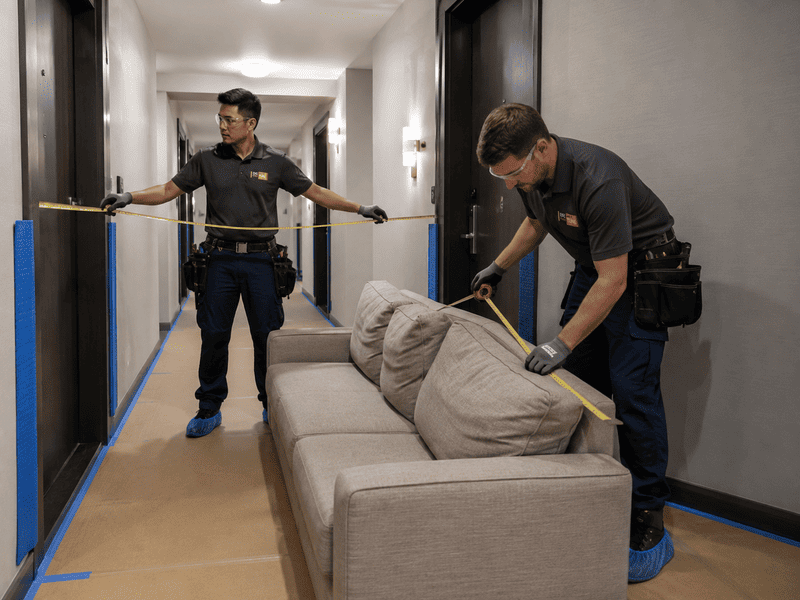
Moving a bed without separating the headboard first is one of the most common ways to damage furniture during relocation. Tight stairs, narrow hallways, elevators, and sharp corners can bend metal brackets, tear upholstery, or chip painted walls before the bed ever reaches the next room.
That is why furniture disassembly for moving is such an important step when large bedroom furniture is involved. Taking the headboard apart before transport reduces stress on the piece and makes reassembly more organized later.
This issue comes up often in Washington DC apartments, Baltimore rowhomes, and townhouses in Arlington or Alexandria, where tight access points leave little room for mistakes. For households budgeting ahead, reviewing moving costs in Baltimore can also help put professional furniture handling into the bigger moving picture.
If the headboard or frame is being replaced instead of moved, planning for disposal and recycling services can make the transition easier and keep unwanted furniture from becoming another problem to solve.
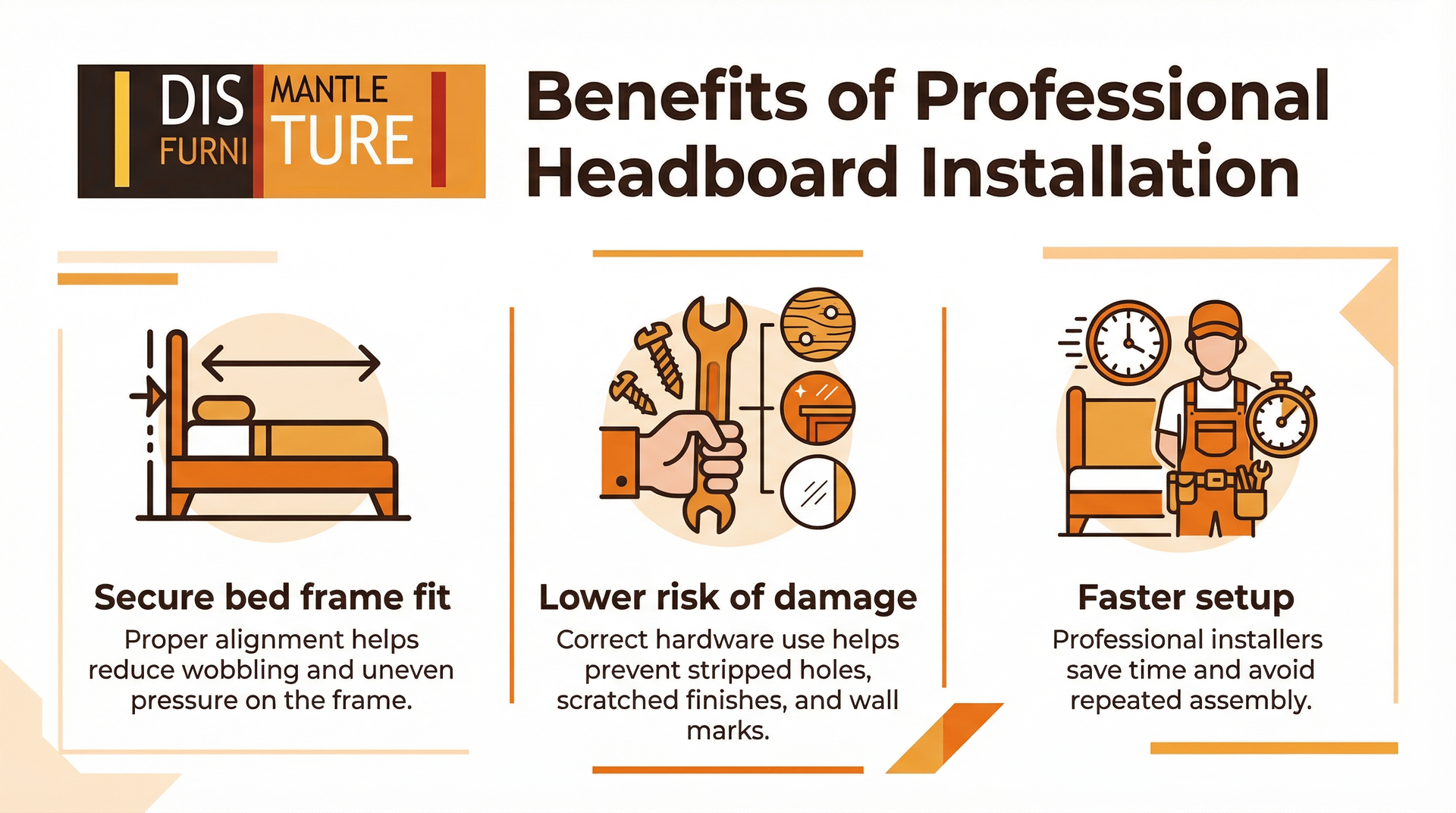
Benefits of professional headboard installation
Professional headboard installation saves time, reduces stress, and protects the bed frame from mistakes that often happen during rushed assembly. For many customers, the biggest benefit is simple: the job gets done once, done safely, and done in a way that feels solid from the first night.
Professional installers can quickly identify hardware issues, compatibility problems, and layout obstacles before they become damage. That matters when the headboard is heavy, when instructions are unclear, or when the bedroom includes other furniture that makes maneuvering more difficult.
This is especially valuable with flat-pack or modular designs. Many customers who buy modern bedroom pieces eventually realize they need IKEA furniture assemblyhelp once the parts are unpacked and the actual setup begins.
For customers who need help beyond the bed itself, Dismantle Furniture also offers broader furniture assembly and disassembly services, which can save time when multiple bedroom pieces need attention in one visit.
How professionals reinstall headboards after moving
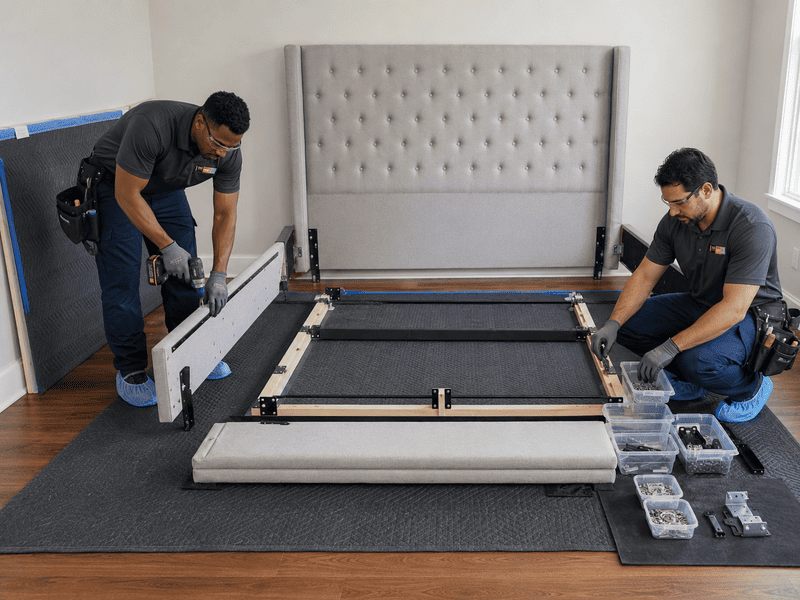
Professional reinstallation after a move involves more than reconnecting the same parts. The frame has to be checked for alignment, the hardware needs to be reviewed, and the bed should be positioned properly in the new room before final tightening begins. That sequence helps restore both stability and appearance.
A typical reinstallation process includes:
- Frame inspection: Check whether the bed frame stayed square during transport
- Hardware review: Confirm that bolts, washers, and brackets are still usable
- Room placement: Set the bed where it fits best before attachment
- Controlled reassembly: Tighten the hardware in the correct order
- Final testing: Make sure the headboard does not wobble, lean, or shift
This kind of careful setup is especially valuable after moves into older homes, apartment buildings, or compact rooms where placement options are limited. It also reduces the chance of discovering a problem only after the bed is already fully assembled.
How Dismantle Furniture handles headboard disassembly and reassembly
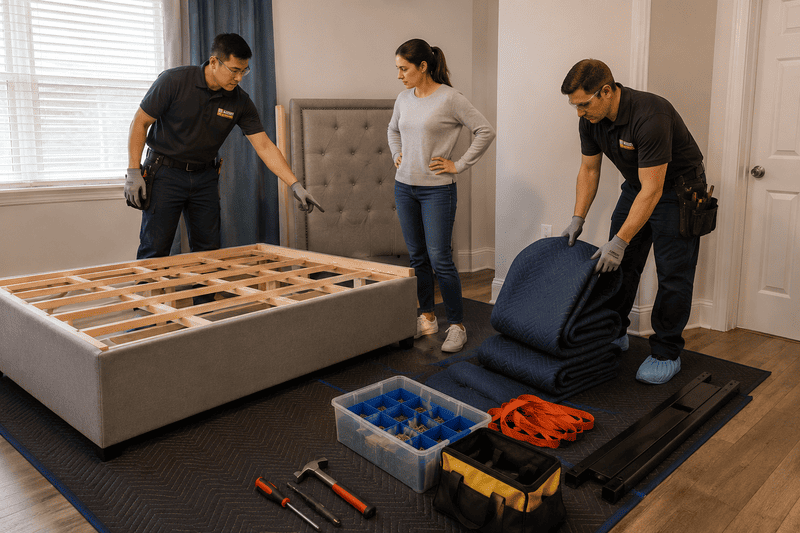
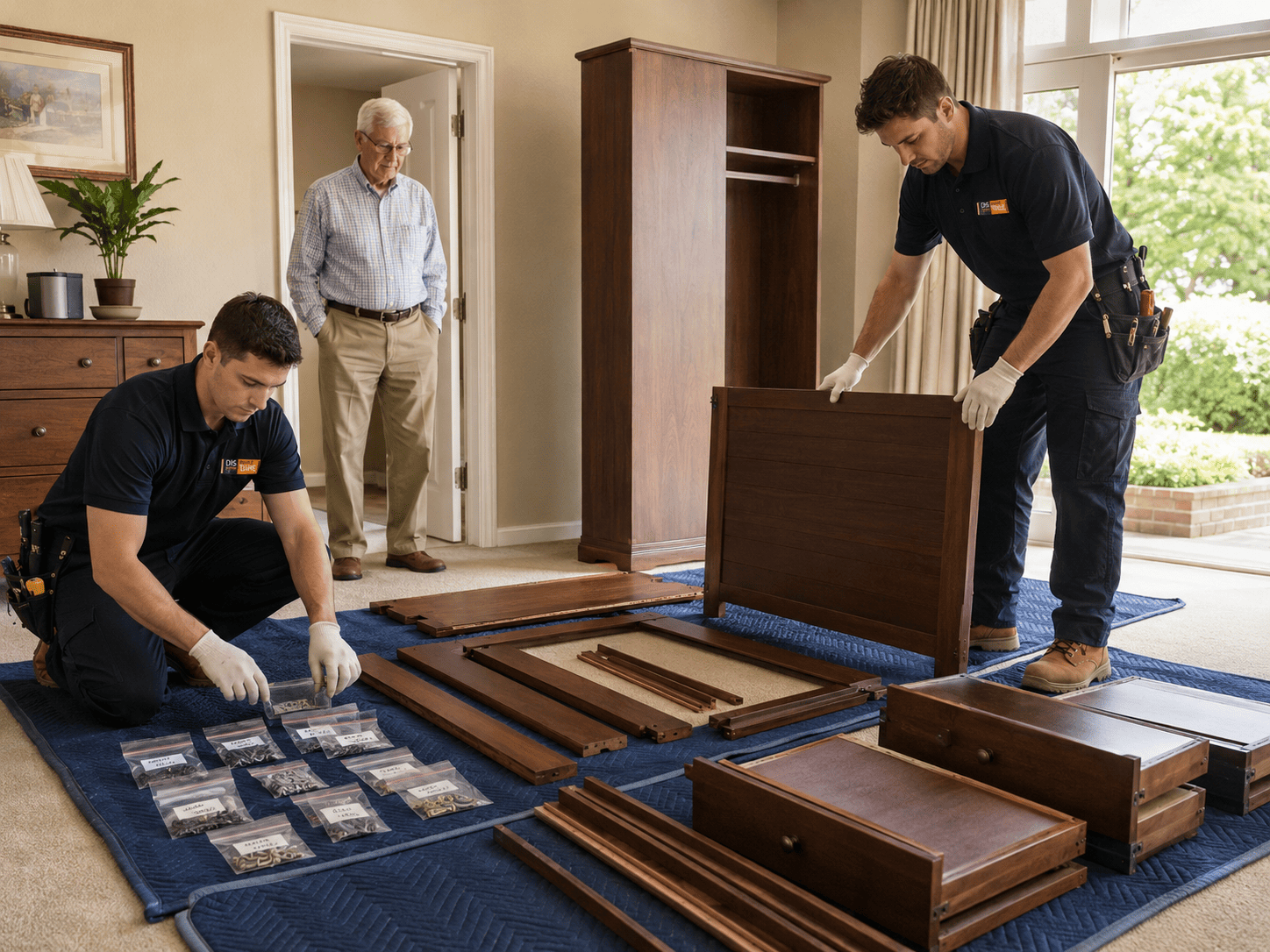
Dismantle Furniture handles headboard work with a protection-first process. The team checks the headboard type, bed frame condition, hardware, and room access before starting. Then they remove the headboard carefully, keep the components organized, and reinstall everything in the right order once the room is ready.
Customers who need a focused headboard disassembly service often book it before a move, renovation, flooring update, or bedroom redesign. That service helps protect the furniture while making the next setup easier and more secure.
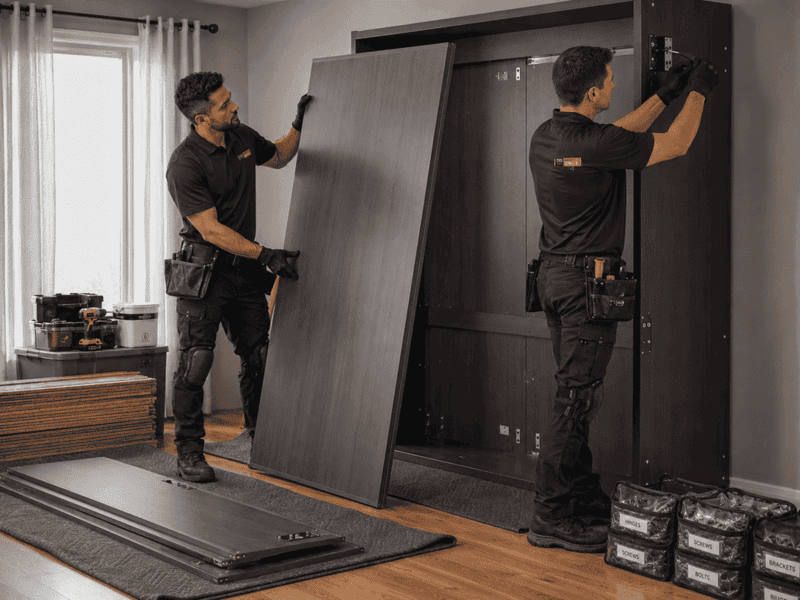
When the bedroom project also includes wardrobes or built-in storage, wardrobe disassembly and reinstallation can be coordinated so the full room is handled as one organized project rather than a series of separate repairs.
Book Professional Headboard Furniture Assembly Before Damage Gets Worse
If your headboard is loose, heavy, recently moved, or simply not fitting the frame correctly, now is the best time to fix the problem before it turns into frame damage or wall repairs. Professional installation and reassembly can save time, protect your furniture, and give the bedroom a finished look without the frustration of doing the job twice.
Dismantle Furniture helps homeowners, renters, movers, and property managers across Maryland, Washington DC, Delaware, Pennsylvania, and Northern Virginia with safe headboard furniture assembly, disassembly, and post-move reinstallation. To schedule service and get pricing, request a quick estimate.
Frequently Asked Questions About Headboard Furniture Disassembly and Reassemble
Do headboards attach to bed frames or walls?
Most headboards attach directly to the bed frame with bolts and brackets. Some decorative or oversized models are wall-mounted, so the correct method depends on the product design and the room setup.
Can I install a headboard without tools?
Some lightweight headboards need only minimal tools, but most secure setups require proper hardware tools and accurate alignment. For heavy or awkward pieces, professional installation is usually the safer choice.
Can a headboard be reattached after moving?
Yes, many headboards can be reattached after moving if the hardware is still available and the frame was not damaged during transport. Professional reinstallation helps make sure the bed is level, stable, and positioned correctly in the new room.
How do I fix a loose headboard?
Start by checking for missing washers, loose bolts, or uneven bracket placement. If the wobble continues after tightening, the issue may involve frame compatibility, incorrect hardware, or worn mounting points.
Are all headboards compatible with every bed frame?
No. Compatibility depends on bed size, mounting hole spacing, bracket type, and frame design. Measuring first is one of the easiest ways to avoid installation mistakes and wasted time.
What hardware is usually required for headboard mounting?
Most headboard setups require bolts, washers, and brackets or adapter plates. Some wall-mounted or specialty designs may also need anchors or additional support hardware.
Should I hire a professional installer for a heavy headboard?
Yes, especially if the headboard is upholstered, oversized, wall-mounted, or being reinstalled after a move. Professional installers reduce the risk of damage and help ensure a stable, secure final result.
Reconfigure Your Modular Office Layout Flawlessly with Our Professional Cubicle Breakdown and Repair