Need to Dismantle and Reinstall a Wardrobe? Here's Why Hiring Professionals Saves Time and Prevents Damage
Moving a wardrobe sounds simple until you are standing in front of a floor-to-ceiling unit trying to get it through a 32-inch doorway, down a narrow stairwell, and into a moving truck without destroying it or your walls.
Wardrobes are heavy, oversized, and built from engineered materials that do not handle stress well. Cam locks snap. Particleboard cracks. Panels warp. And in apartments and townhomes across Maryland, Washington, DC, Northern Virginia, Delaware, and Pennsylvania, stairwell clearances and elevator size limits make moving a fully assembled wardrobe nearly impossible without causing damage along the way.
DIY dismantling carries its own risks. Stripped screws, lost hardware, and misaligned reassembly are common outcomes for anyone attempting a wardrobe disassembly without the right tools or experience.
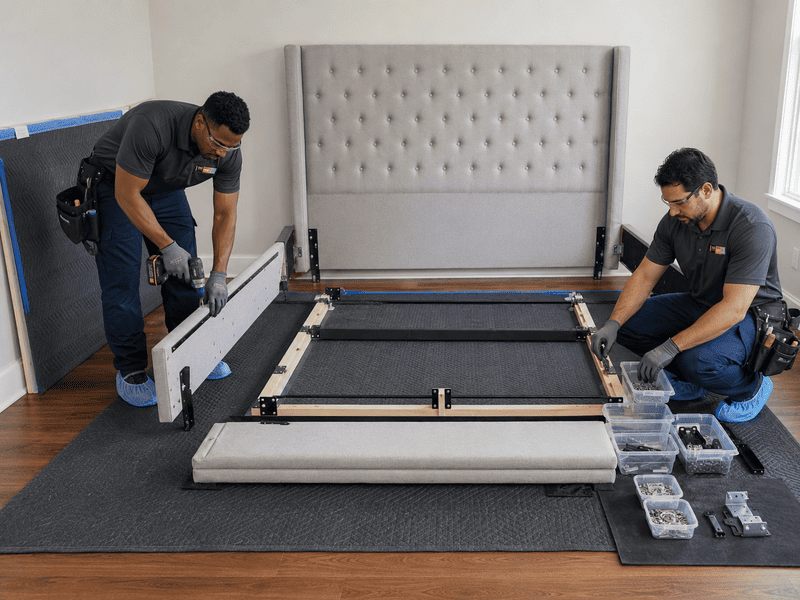
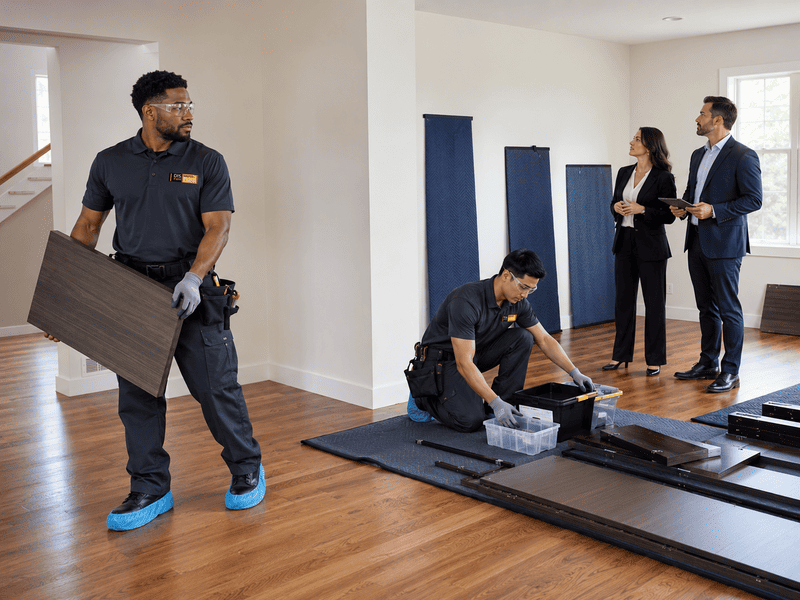
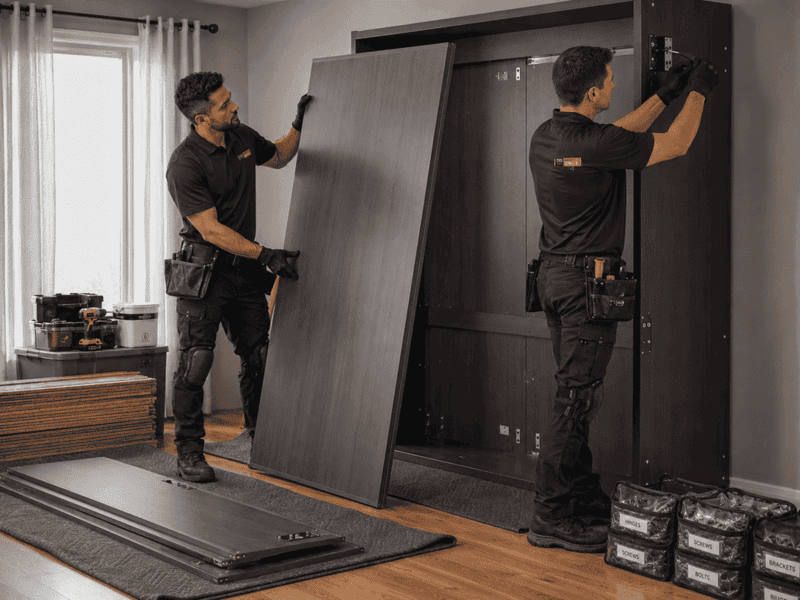
A professional wardrobe dismantling and reinstallation service solves all of this. Trained technicians disassemble your unit systematically, protect every component during transport, and reinstall it so it functions exactly as it did before. The result is a faster move, zero preventable damage, and significantly less stress on moving day.
Why Do Wardrobes Need to Be Dismantled Before Moving?
Most wardrobes cannot safely pass through standard residential doorways and stairwells in their assembled form. Forcing them through tight clearances places structural stress on joints and panels, which can cause irreversible damage. Modular and built-in systems in particular are engineered for stationary installation, not transportation.
Wardrobe dimensions regularly exceed standard doorway widths of 32 to 36 inches. Even when a unit appears close in size, the added bulk from doors, sliding tracks, and external panels pushes it well past safe clearance.
Built-in closet systems present a separate challenge entirely. These units are anchored to walls and sometimes ceilings, meaning improper removal can result in wall damage, torn drywall, and structural anchoring points being pulled out entirely.
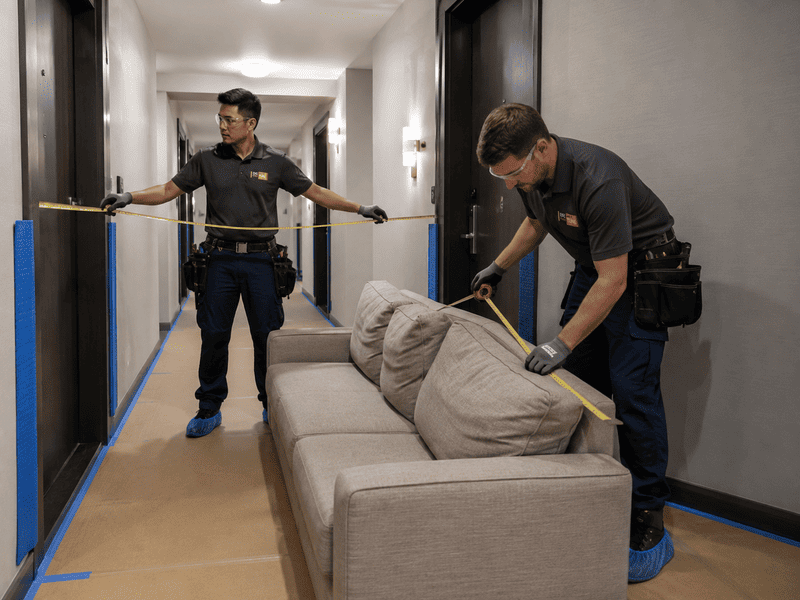
High-rise buildings in urban areas like Washington, DC, add another layer of complexity. Service elevators have strict size and weight limits. Building management often requires furniture to be wrapped and moved on approved equipment. Disassembling the wardrobe beforehand is not just practical but frequently required.
Reviewing a professional wardrobe removal service before your move can help you understand exactly what the process involves and what to expect on moving day.
What Can Go Wrong When You Try to Dismantle a Wardrobe Yourself?
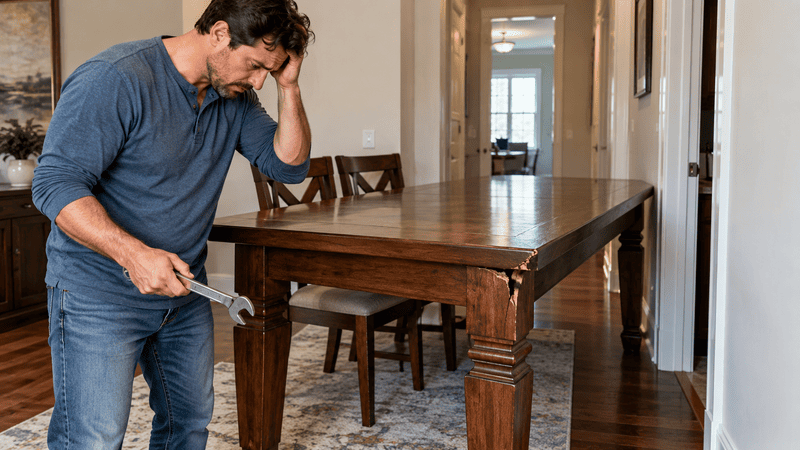
DIY wardrobe dismantling frequently results in stripped screws, broken cam lock connectors, cracked panels, and missing hardware. Without experience, reassembly often leaves units misaligned, unstable, or structurally weakened. The cost of repairing or replacing a damaged wardrobe routinely exceeds the cost of hiring a professional from the start.
The most common DIY problems include:
- Stripped screws that can no longer grip the panel material
- Cam lock connectors that snap when forced or turned without the right technique
- Particleboard panels that crack along the grain when lifted without proper support
- Sliding door tracks that warp when removed without releasing tension correctly
- Small hardware pieces, hinges, and brackets that get misplaced during disassembly
- Reassembly misalignment that causes doors to hang unevenly or panels to bow
These are not minor inconveniences. A wardrobe with a cracked side panel or a stripped cam lock housing cannot be reliably restored. The structural integrity is compromised, and the only fix is often a full panel replacement or buying a new unit altogether.
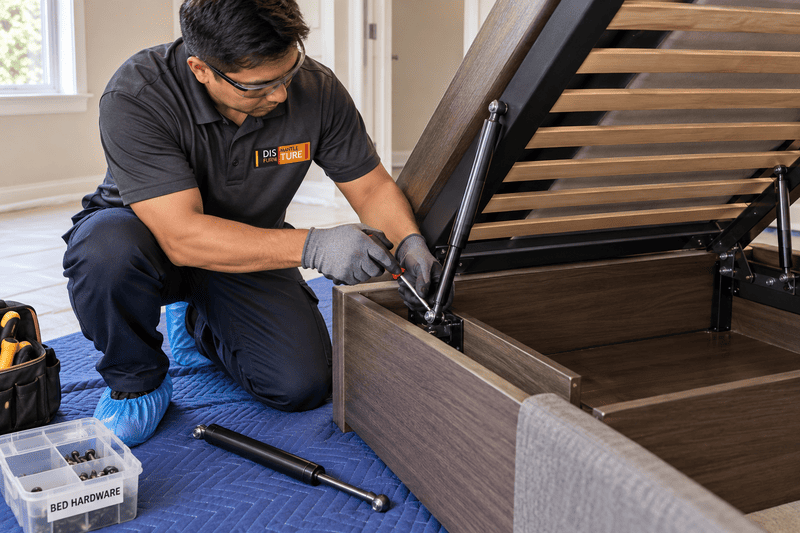
Professional furniture disassembly technicians carry the correct tools for every connector type, work methodically through each component, and keep hardware organized so nothing is lost between disassembly and reinstallation.
What Types of Wardrobes Require Professional Handling?
Sliding door wardrobes, mirrored units, built-in closet systems, large modular configurations, and heavy hardwood armoires all require professional handling during disassembly and reinstallation. These types involve precision components, fragile surfaces, or anchored installation that cannot be safely managed without the right equipment and experience.
- Sliding door wardrobes use top and bottom tracks that must be removed and reinstalled with precise alignment. Even minor deviations during reinstallation cause doors to jump off tracks, drag, or become inoperable.
- Mirrored wardrobes combine heavy glass panels with standard furniture connectors. One wrong move during dismantling can crack a full-length mirror, which is expensive to replace and potentially dangerous.
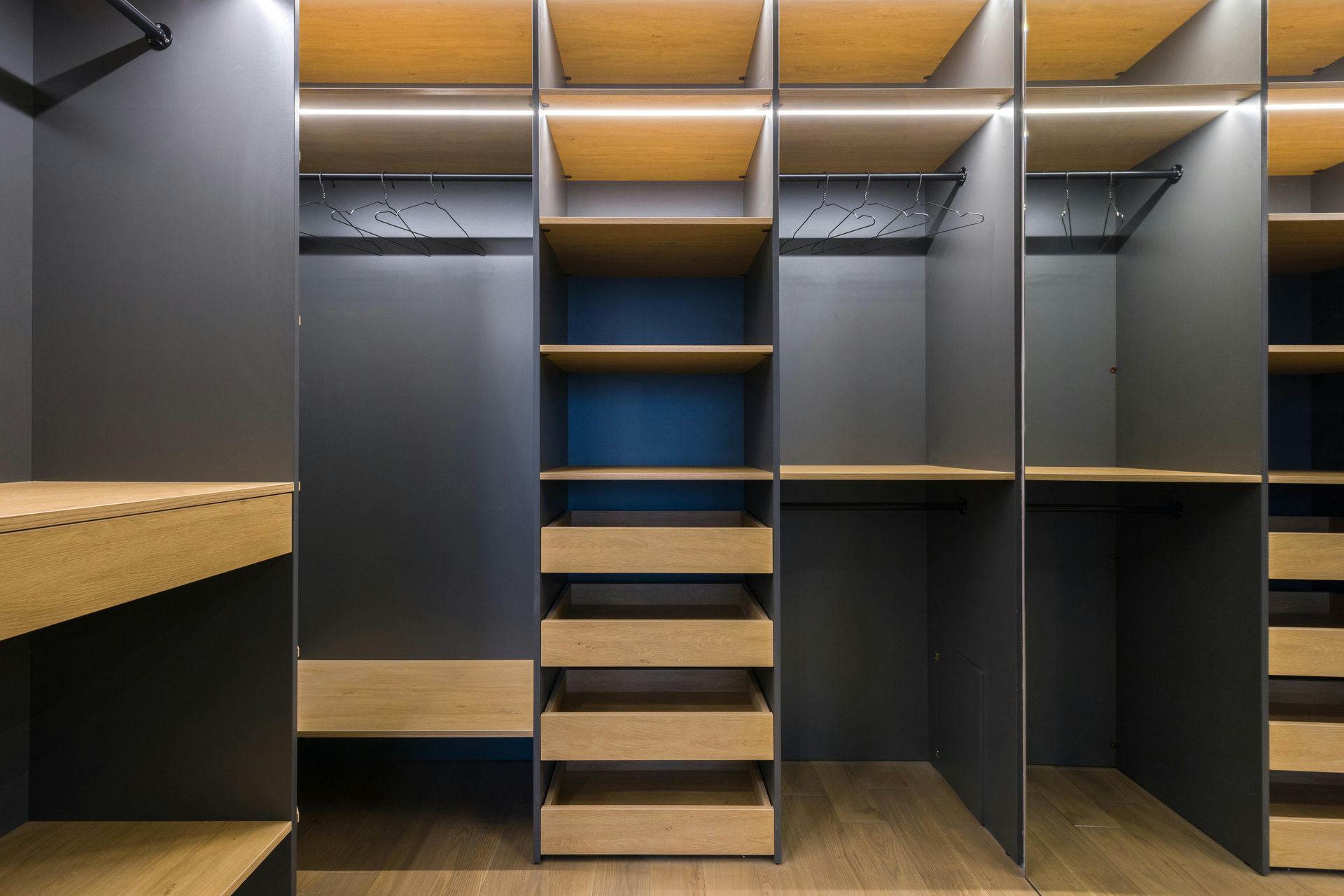
- Built-in closet systems are anchored to walls and require careful removal to avoid structural damage to the room itself.
- Large modular systems, such as those available through the PAX wardrobe lineup, consist of multiple individual units connected side by side. Disassembling these systems requires separating panels in the correct sequence to prevent collapse.
- Heavy hardwood armoires can weigh several hundred pounds. If you are searching for classic armoire styles, you already know these are substantial pieces that require equipment and team coordination to move safely.
What Is the Typical Cost to Dismantle and Reinstall a Wardrobe?
Wardrobe disassembly and reinstallation costs vary based on the type of unit, number of panels, door configuration, and whether the service includes transport. Basic single-unit disassembly tends to fall in the lower range, while full dismantle and reinstall services for large modular or built-in systems represent a higher investment.
Typical cost factors by service type:
- Basic wardrobe disassembly for a standard two-door unit generally falls in a modest range suitable for straightforward relocations within the same building or nearby.
- Multi-panel sliding wardrobes involve more components and precision work, which places them in a mid-range tier.
- Built-in closet systems requiring wall anchor removal, drywall repair, and full reinstallation at a new location represent the higher end of the service spectrum.
- Full dismantle and reinstall packages covering disassembly, protective wrapping, transport coordination, and complete reinstallation with alignment are priced accordingly based on scope.
Pricing is based on job scope, not a one-size-fits-all rate. For an accurate figure based on your specific wardrobe, request a quick estimate through Dismantle Furniture to submit your project details.
What Factors Affect Wardrobe Disassembly Costs?
Several variables influence the final cost of a wardrobe disassembly and reinstallation service. Understanding these factors helps you anticipate your quote and plan your move accordingly.
The key variables include:
- Wardrobe size and height: Floor-to-ceiling units require more labor and panel handling than shorter standalone wardrobes.
- Number of panels: Modular systems with four or more connected sections take significantly longer to disassemble and reassemble than single units.
- Door style: Hinged doors are straightforward. Sliding track doors require additional care and calibration during both removal and reinstallation.
- Mirror components: Glass panels add weight, fragility, and handling time.
- Hardware condition: Older units with worn cam locks, rusted hinges, or previously repaired joints require more careful work to disassemble without causing further damage.
- Accessibility: Homes with narrow hallways, tight stairwells, or multi-floor layouts in areas like Northern Virginia or Pennsylvania townhomes require more labor time.
- Relocation complexity: Moving a wardrobe within the same room differs significantly from relocating it across multiple floors or to a different property.
Technicians who handle cabinet removal and other large built-in fixtures apply the same scoping process to wardrobe jobs, ensuring every cost factor is accounted for before work begins.
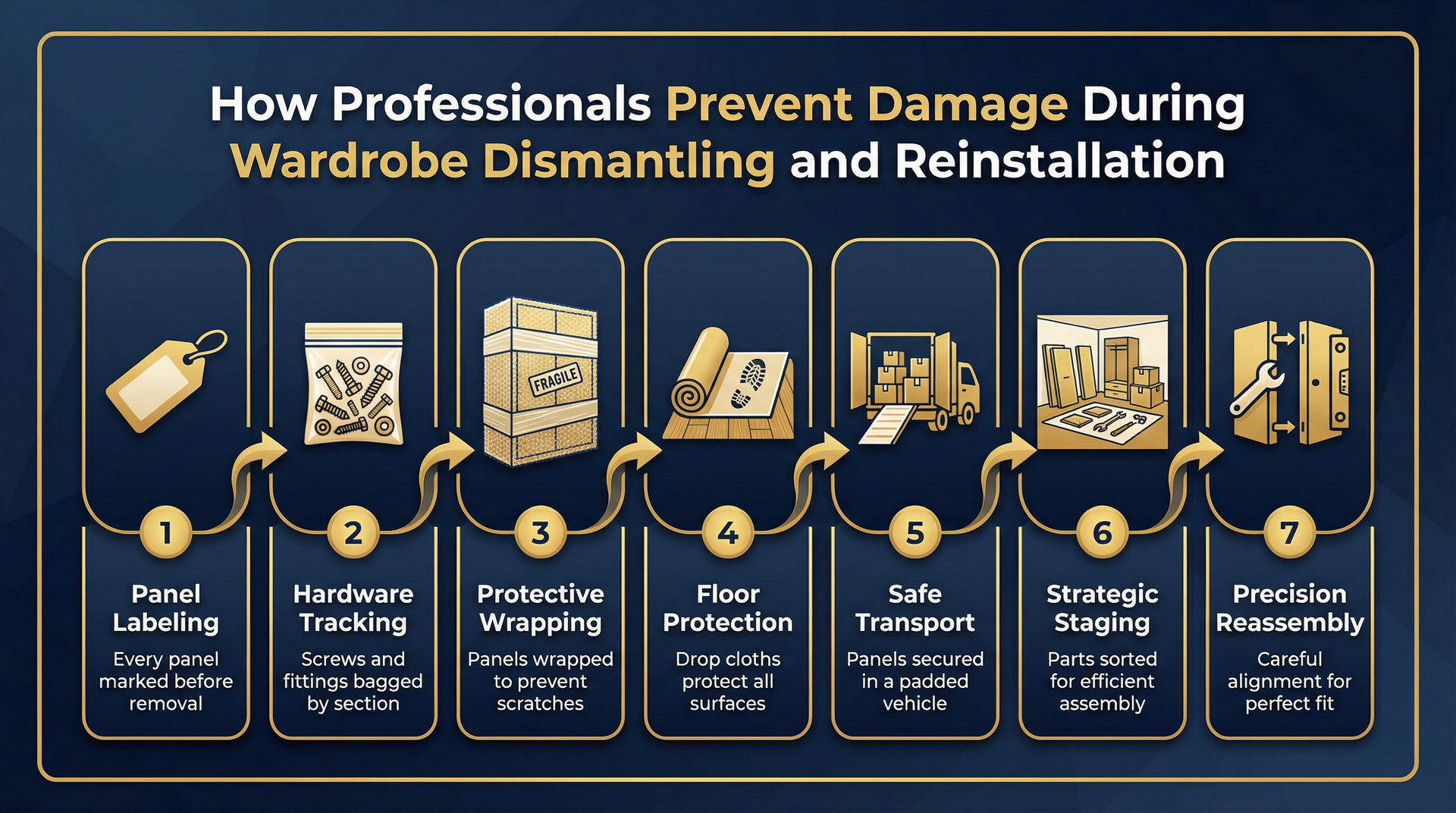
How Do Professionals Prevent Damage During Dismantling and Reinstallation?
Professional technicians use a systematic, documented process to ensure every wardrobe component is protected from the moment disassembly begins until the unit is fully reinstalled and aligned at its destination.
The process includes:
- Panel labeling: Every panel is marked with its position and orientation before removal so reassembly follows the correct sequence without guesswork.
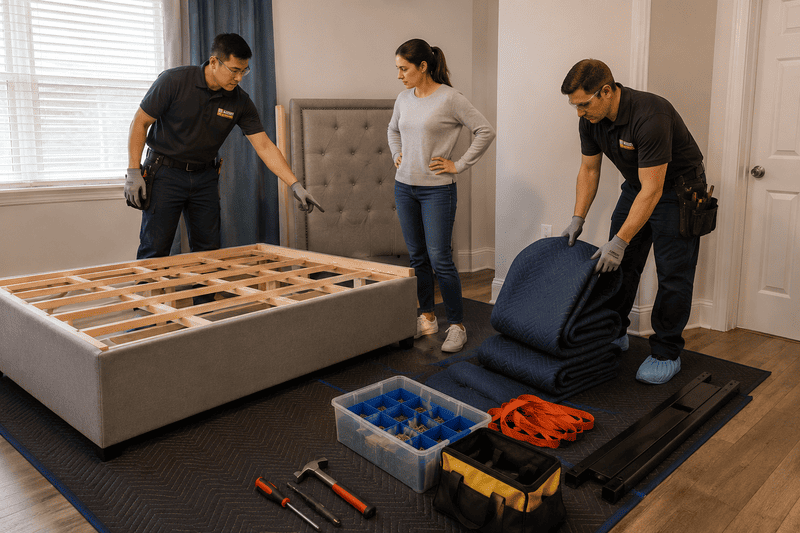
- Hardware tracking: Screws, cam locks, hinges, and brackets are bagged and labeled by section, ensuring nothing is misplaced during transport.
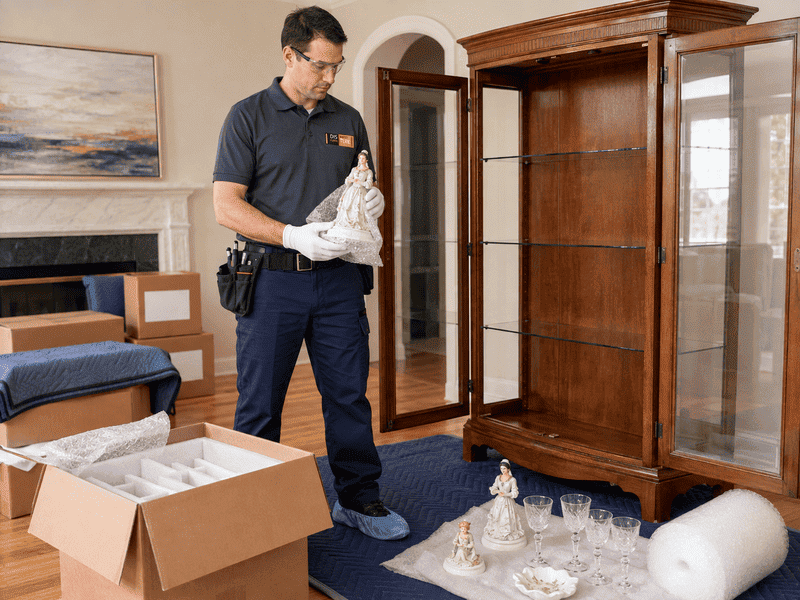
- Protective wrapping: Panels are wrapped in moving blankets or stretch wrap to prevent scratches, chips, and moisture damage.
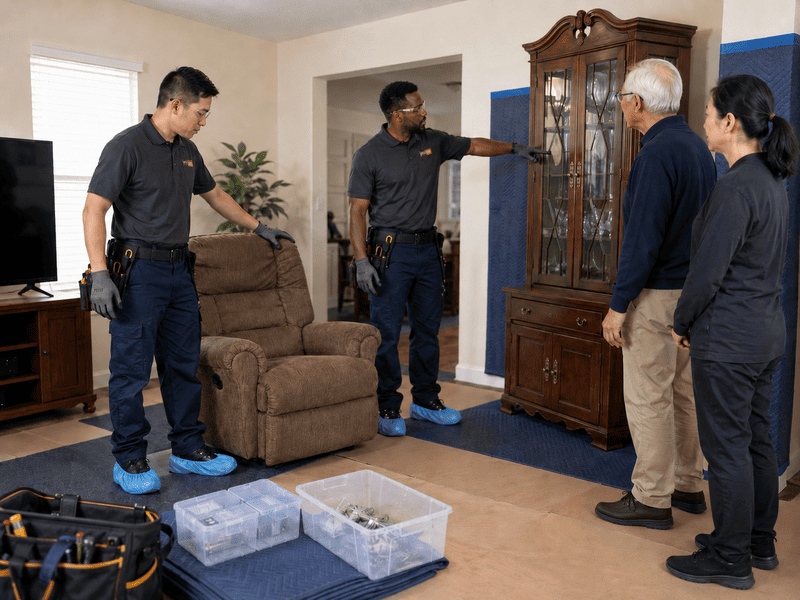
- Floor protection: Drop cloths and floor runners protect hardwood, tile, and carpet surfaces during the moving process.
- Re-leveling: Once reinstalled, the entire unit is checked for level and plumb to ensure doors hang correctly and the structure is stable.
- Door alignment: Sliding tracks and hinged doors are adjusted and calibrated during reinstallation to restore full functionality.
- Structural reinforcement: Anchor points are secured properly, particularly for built-in systems being installed in a new room.
This same level of care applies across other large furniture types. For bulky upholstered pieces, a professional couch removal service follows an equally structured approach to protect both the furniture and the property.
For broader project needs, homeowners managing full relocations or renovations also benefit from complementary services. A skilled home assembly team can handle new furniture builds at the destination. Renters managing full-room setups may also find value in professional IKEA installation support.
Commercial clients relocating offices can coordinate with specialists in office cubicles disassembly and reinstallation. Those handling outdoor storage transitions can arrange outdoor shed setup through dedicated professionals. Homeowners redesigning closet spaces may want to explore expert closet organizer installation. And for those managing full room resets after a move, closet organization services can bring everything together efficiently.
Spring Moving and Renovation Season: Why Timing Matters
Spring is the busiest period for residential moves, lease turnovers, and home renovations. Availability for professional wardrobe dismantling services fills up quickly across Maryland, Washington, DC, Delaware, and surrounding areas during March through June.
Lease turnovers push thousands of renters to vacate and set up new spaces within days of each other. Property managers coordinating tenant transitions in multi-unit buildings often need same-week service for multiple units. Families staging homes for spring sale listings need wardrobes removed cleanly to improve room presentation. Renovation projects that require clearing bedrooms before contractors arrive also spike during this season.
Booking your wardrobe dismantling and reinstallation service in advance during peak season avoids delays, ensures you get a preferred date, and gives technicians adequate time to scope your job properly. Last-minute requests during peak periods often result in limited availability or rushed timelines that do not serve the job well.
Why Hiring Professionals Saves Time and Reduces Stress
For most homeowners and renters, the real value of a professional wardrobe disassembly service is not just in the outcome. It is in everything you do not have to deal with along the way.
Professional teams bring the correct tools for every connector type, from Allen keys and cam lock drivers to panel separators and strap systems for heavy units. They work efficiently, completing most standard wardrobe disassembly jobs in a fraction of the time it would take an inexperienced person to figure out the process.
There is also the matter of liability. Trained technicians understand how to move furniture without damaging walls, door frames, and floors. If something unexpected happens during a professional service, the company's insurance covers it. DIY moves offer no such protection.
Manufacturer warranty considerations are also relevant. Some furniture warranties specify that the unit must be professionally reassembled to remain valid. This is particularly common with premium sliding door systems and built-in configurations.
For anyone moving within or around the greater DC metro area, including Northern Virginia, Maryland, Delaware, and Pennsylvania, Dismantle Furniture provides experienced, insured technicians who handle wardrobe disassembly and reinstallation as a specialized service, not as an afterthought.
Ready to Schedule Your Wardrobe Service?
If you have a move, renovation, or room transition coming up and need your wardrobe handled properly, now is the right time to get a quote.
Dismantle Furniture serves homeowners, renters, apartment movers, and property managers throughout Maryland, Washington, DC, Northern Virginia, Delaware, and Pennsylvania. Whether you have a single sliding door unit or a full built-in closet system spanning an entire bedroom wall, the team is equipped to disassemble it safely, protect it during transport, and reinstall it to a fully functional finish.
Use the instant booking form to confirm your service area, describe your wardrobe type, and receive a tailored quote. Peak season slots fill fast, so booking ahead gives you the best access to available dates.
Frequently Asked Questions About Hiring a Professional Wardrobe Disassembly Service
How much does it cost to dismantle and reinstall a wardrobe?
Costs depend on wardrobe type, size, door configuration, and whether reinstallation is included. Basic disassembly of a standard unit is generally more affordable, while full dismantle and reinstall services for large modular or built-in systems are priced based on full scope. Requesting a quote based on your specific unit is the most reliable way to get an accurate figure.
Can you move a large wardrobe without taking it apart?
In most residential settings, fully assembled wardrobes cannot pass through standard doorways, stairwells, or elevator openings without risking damage. Disassembly is typically required for safe relocation, particularly in apartments and multi-floor homes.
How long does wardrobe disassembly take?
A standard two-door wardrobe typically takes between one and two hours to disassemble. Larger modular systems, built-in wardrobes, or sliding door units with multiple panels may require three to four hours or more, depending on complexity and accessibility.
Do sliding door wardrobes need professional handling?
Yes. Sliding door wardrobes rely on precisely aligned top and bottom tracks. Removing and reinstalling these tracks without proper calibration causes operational issues that are difficult to correct after the fact. Professional handling protects both the door mechanism and the structural integrity of the unit.
Can mirrored wardrobe doors break during moving?
Mirrored panels are among the most vulnerable components of any wardrobe. They can crack from sudden impact, flexion during transport, or improper removal. Professional technicians use padding, protective wrapping, and correct carrying techniques to minimize this risk significantly.
Will dismantling affect my wardrobe warranty?
Some manufacturers specify professional reassembly as a warranty condition. If your wardrobe was purchased with a coverage plan, having a professional disassemble and reinstall it is the safest way to avoid voiding those terms.
Can you reinstall a wardrobe in a different room or new home?
Yes. Professional reinstallation services are not limited to the original room or property. Technicians can reinstall a disassembled wardrobe in any compatible space, including new homes, apartments, or renovated rooms, provided the wall dimensions and floor space support the unit's footprint.
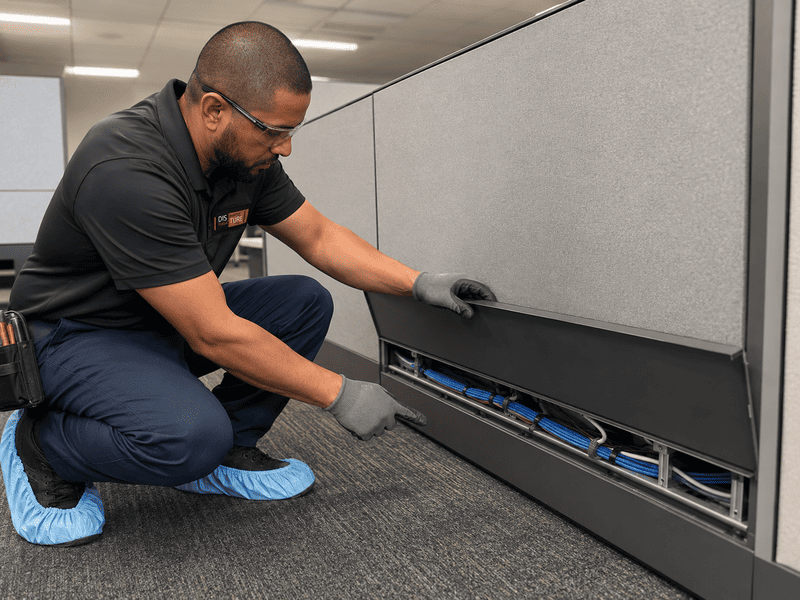
Reconfigure Your Modular Office Layout Flawlessly with Our Professional Cubicle Breakdown and Repair