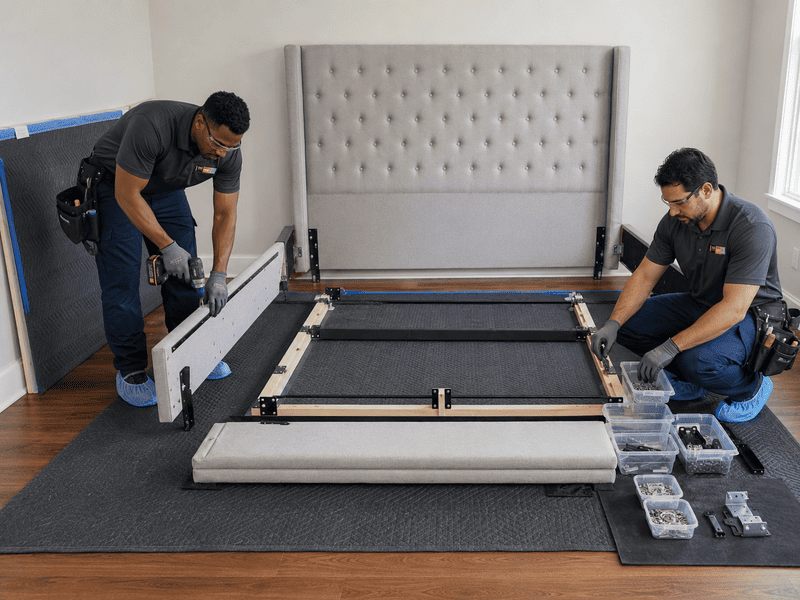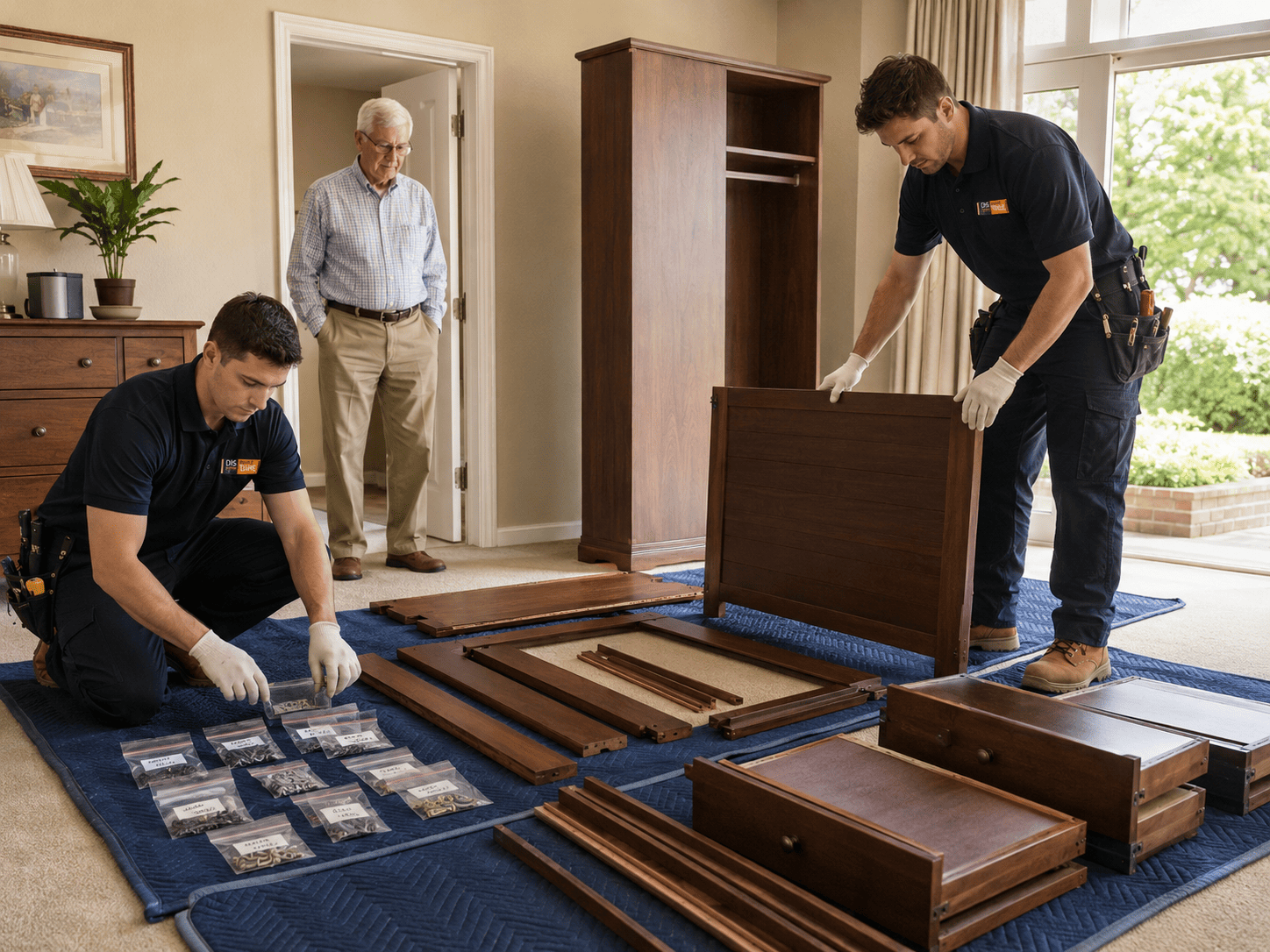
Box Spring Disassembly for Tight Staircases, Older Homes, and Small Doorways
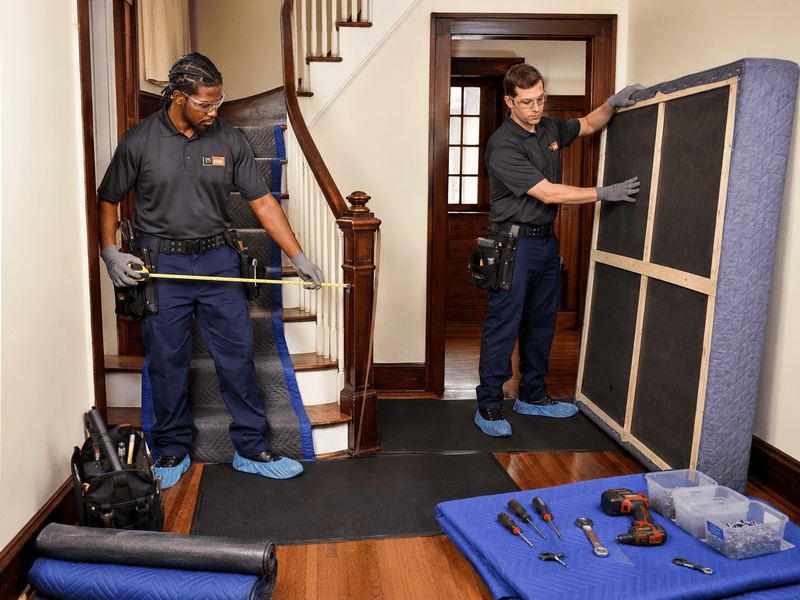
Box spring disassembly helps when a rigid box spring will not fit through tight staircases, older home layouts, small doorways, narrow hallways, or low-clearance turns. The best plan depends on box spring size, stair angle, doorway width, hallway clearance, bed frame type, wall protection needs, moving schedule, and whether the piece will be reassembled, stored, hauled away, or replaced.
- Box springs often get stuck because they do not flex like mattresses
- Older homes usually have tighter stairs, hallways, and bedroom entries
- Disassembly can help reduce moving-day damage risk
- Bed parts and hardware should stay organized from start to finish
- Professional help can save time, strain, and frustration
A Box Spring Can Stop a Move at the Staircase
A box spring may look simple, but its rigid shape can stop a bedroom move fast when stairs are narrow, turns are tight, and doors are smaller than expected. That is why box spring disassembly often becomes the most practical solution before damage, delays, or last-minute hauling problems grow.
Why the problem escalates fast
Many people expect a box spring to move like a mattress. Instead, the frame holds its shape and catches at stair landings, hallway corners, and bedroom doors. In older homes, walk-up apartments, and attic or basement bedrooms, forcing the piece can scuff walls, hit railings, crack trim, or damage the box spring itself.
Professional disassembly supports a more controlled move and helps make hard bedroom layouts easier to manage.
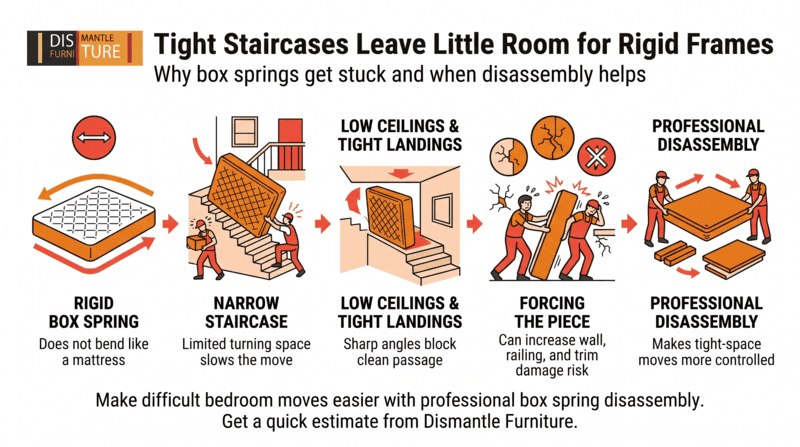
Tight Staircases Leave Little Room for Rigid Frames
Tight staircases create problems because a box spring needs both width and turning space, not just a clear path. When a staircase is narrow, curved, or boxed in by railings and low ceilings, a rigid frame can lock in place before it reaches the next landing.
A crew handling box spring disassembly for tight spaces can check the moving path early, while box spring bed planning guidance shows why bed dimensions matter before carrying begins.
- Narrow staircases limit turning room
- Curved staircases reduce usable angle
- Low ceilings block upright rotation
- Tight landings make repositioning harder
- Railings and wall corners increase contact risk
Older Homes Were Not Built for Modern Bed Sizes
Older homes often create bedroom furniture access problems because doorways, stair widths, and hallway layouts were built for different furniture dimensions. As a result, queen and king box springs may become difficult to move even when the room itself looks large enough.
Older rowhouses, townhomes, and converted apartments can be especially tricky. Even box springs foundations for bedroom planning do not solve the access issue once a rigid piece meets a narrow turn. In many cases, bed disassembly before moving day should be planned before movers arrive.
- Small landings are common in older layouts
- Steeper stairs reduce carrying control
- Tight hallway turns interrupt forward movement
- Basement and attic routes often have low clearance
- Door trim and plaster walls can be easier to mark

Small Doorways Create Problems Before the Bedroom Is Cleared
Small doorways cause trouble because the opening itself may be the first hard stop, especially when the hall outside the room is also narrow. A box spring can clear one space but still fail at the final turn into or out of the bedroom.
In small bedrooms and walk-up apartments, access problems usually build in layers. A narrow door, short hall, and sharp turn work together. That is when furniture disassembly for difficult moves becomes more useful than trying the same angle again.
- Bedroom doors can be narrower than expected
- Hallway turns limit repositioning space
- Door casings reduce usable clearance
- Small rooms make pivoting harder
- Mattresses may pass where box springs do not
Headboards and Wardrobes Can Add to the Moving Challenge
Headboards and wardrobes often complicate the same move because they add bulk, height, and extra hardware to an already tight path. When several oversized bedroom pieces must move together, each item should be assessed separately rather than treated as one standard bedroom set.
A tufted headboard may need fabric-safe handling, which is why tufted headboard disassembly before moving matters in tighter homes. Large wardrobes also need planning, and IKEA PAX wardrobe disassembly support can help when panels, doors, and interiors must come apart in sequence. After delivery, some homes also need IKEA furniture assembly after setup to finish the room.
- Tufted headboards can snag on corners
- Tall wardrobes struggle with low ceilings
- Large panels are harder on curved stairs
- Hardware needs sorting for reassembly
- Mixed furniture sizes call for separate plans
Disassembly Helps Protect Walls, Railings, and Bed Parts
Careful disassembly helps reduce avoidable damage because it turns one bulky piece into smaller, more manageable components. That approach supports better control at stair turns, near railings, and through narrow door frames where oversized furniture is most likely to scrape.
Protection matters just as much as cutting the right piece. Bed parts should be labeled, wrapped, and kept together, especially if the furniture will be stored or rebuilt later. Homes that need bed frame assembly after relocation usually benefit from organized hardware from the start.
- Corner guards may help shield trim
- Hardware bags keep fasteners together
- Wrapped parts are easier to stack safely
- Railings need extra clearance during turns
- Planned handling helps avoid forcing oversized pieces

Moving and Hauling Plans Should Be Made Before Cutting Time Close
Moving and hauling plans should be arranged early because once a box spring is apart, the next step must already be clear. The piece may be reassembled, stored, removed, or hauled away, and each outcome changes how the work should be organized.
Box spring disassembly planning means checking the box spring size, stair angle, doorway width, hallway turns, bed parts, moving path, wall protection needs, hauling plan, and reassembly expectations before the furniture is moved.
- Confirm whether the box spring stays or goes
- Decide if storage is part of the move
- Reserve access for movers or hauling crews
- Keep timing realistic for same-day transitions
- Match labor needs to the furniture path
When the schedule includes removal too, moving and hauling service help can keep the job moving, while bed assembly after bedroom moves may be useful after the new room is ready.
A Quick Estimate Helps Families Avoid Last Minute Guesswork
A quick estimate helps because families can understand scope, labor, timing, and likely obstacles before moving day pressure builds. That early review is especially helpful for downsizing moves, estate cleanouts, and homes where several bedroom pieces must be handled in one visit.
What to gather before asking
If you want to request a quick disassembly estimate, gather the basics first so the job can be assessed more accurately.
| Detail to Share | Why It Matters |
|---|---|
| Box spring size | Affects carrying angles and labor |
| Stair type | Shows turn difficulty and clearance |
| Doorway width | Flags likely bottlenecks |
| Bedroom location | Indicates route length and complexity |
| Haul-away or storage plan | Changes time and handling needs |

Professional Furniture Disassembly Keeps Bedroom Moves More Manageable
Professional furniture disassembly is recommended when rigid pieces are already catching on stairs, doors, or hallway turns, or when multiple oversized bedroom items must be coordinated in one move. It can save time, improve control, and support a less stressful process in difficult layouts.
When service makes sense
Older homes, rowhouses, walk-ups, and small bedrooms all create situations where experience matters. Dismantle Furniture offers professional furniture disassembly services for controlled bedroom moves, while related needs such as furniture disassembly for difficult moves and bed frame assembly after relocation show how often disassembly and reassembly go hand in hand.
Request Box Spring Disassembly Help
Careful box spring disassembly can make tight staircases, older home layouts, and small doorway moves easier to manage by supporting protected paths, organized parts, and steadier furniture handling. If your project includes more than the bedroom, some households also arrange office furniture assembly, trampoline repair help, or wall-mounted basketball hoop installation after the move.
Get the bedroom move under control
Contact Dismantle Furniture for box spring disassembly, tufted headboard disassembly, IKEA PAX wardrobe disassembly, moving and hauling support, quick estimates, and professional furniture disassembly services.
Frequently Asked Questions
Can a box spring be taken apart to fit downstairs?
Yes, many box springs can be disassembled when access is too tight for a full-size move.
Why do box springs get stuck in older homes?
Older homes often have narrower stairs, tighter landings, and smaller doorways than modern layouts.
Is it better to disassemble a box spring or force it through?
Disassembly is usually the better choice because forcing it can increase the risk of damage.
Can a box spring be reassembled after disassembly?
In many cases, yes, but the plan depends on the box spring design and future use.
What should be cleared before box spring removal?
Clear hallways, stairs, doorways, wall décor, and floor obstacles before moving begins.
Do tufted headboards need separate disassembly?
Often they do, especially when corners, fabric, height, or stair turns make handling harder.
Can wardrobe disassembly help during bedroom moves?
Yes, large wardrobes can block access and may need separate planning to clear the route.
When should homeowners request box spring disassembly help?
It is best to ask before moving day becomes urgent, especially in older homes or tight spaces.


Reconfigure Your Modular Office Layout Flawlessly with Our Professional Cubicle Breakdown and Repair