Avoid Expensive DIY Mistakes and Let Expert Movers Safely Disassemble and Pack Your Heavy Furniture
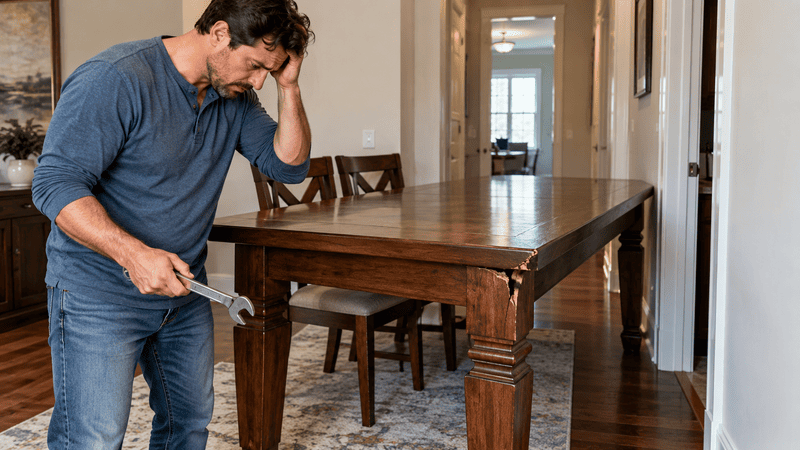
Professional furniture disassembly typically involves identifying connection points, removing hardware in the correct sequence, labeling components, protecting panels, organizing fasteners, wrapping furniture parts, and preparing each piece for relocation. The right approach depends on furniture size, construction, materials, connection systems, fragile components, access route, property layout, and manufacturer requirements.
- Large furniture often needs partial disassembly before moving day
- Correct teardown order protects connection points and fittings
- Hardware should remain labeled and organized by furniture piece
- Disassembled components need proper wrapping before loading
- Professional help can reduce teardown guesswork
Heavy Furniture Should Be Prepared Before Moving Day
Heavy furniture often looks easier to dismantle than it actually is. A king storage bed or wall unit can hide dozens of fasteners, brackets, and interlocking panels behind finished surfaces.
Then the problems start. The wrong tool strips a bolt head. A forced panel splits along a seam. One missing cam fitting turns reassembly into a weekend of frustration, and a rushed lift scuffs the hallway wall.
Professional furniture disassembly offers a practical path forward. Trained technicians approach heavy furniture relocation with organized teardown, clear labeling, protective wrapping, and moving preparation that keeps every component accounted for.
Know Which Furniture Should Be Disassembled First
The pieces that usually need teardown first are the largest, heaviest, or most complex items in the home. Beds, sectionals, wall units, office systems, and fragile display furniture top the list.
Start With the Biggest Footprints
Walk each room and flag anything wider than your doorways or too heavy for two people to control. Families moving from townhouses in Maryland or detached homes in Pennsylvania often discover that a handful of oversized pieces drive the entire moving plan.
Match Teardown Order to Your Layout
Tackle rooms farthest from the exit first. This keeps hallways clear and gives technicians workspace for controlled disassembly without stacking panels where people still need to walk.
Large Bedroom Furniture Requires Controlled Teardown
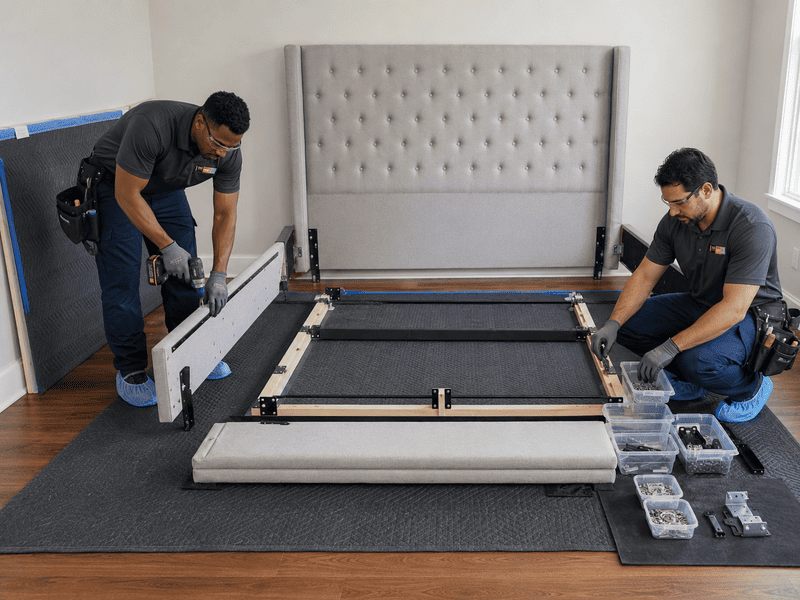
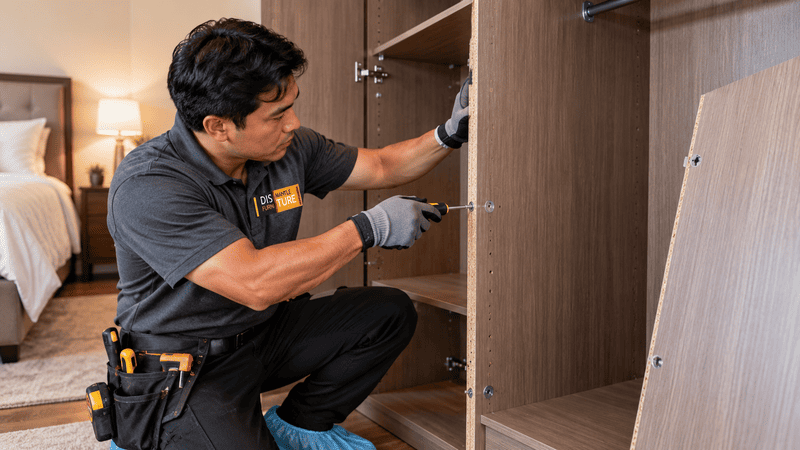
Bedroom furniture usually requires careful sequencing, joint identification, hardware labeling, panel protection, and enough open workspace for controlled disassembly. Rushing a large bed frame can crack panels or strip hidden fasteners.
Common bedroom pieces that benefit from teardown include:
- Multi-piece king storage beds
- Heavy wooden armoires
- Complex bunk beds
- Custom walk-in closet organizers
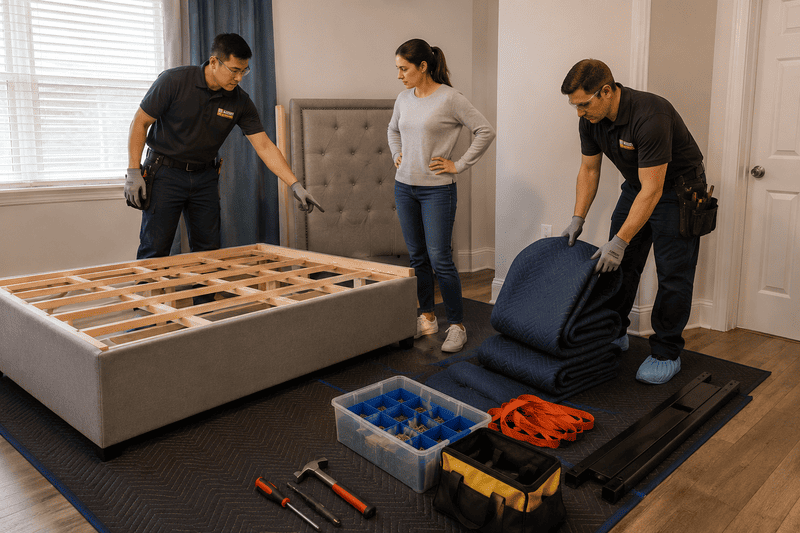
Checking standard wardrobe size dimensions against your doorway before move day saves real headaches. For large bed frames, professional bed disassembly help keeps rails, slats, and hardware kits together so the rebuild goes smoothly.
Sectionals and Living Room Furniture Need Careful Breakdown
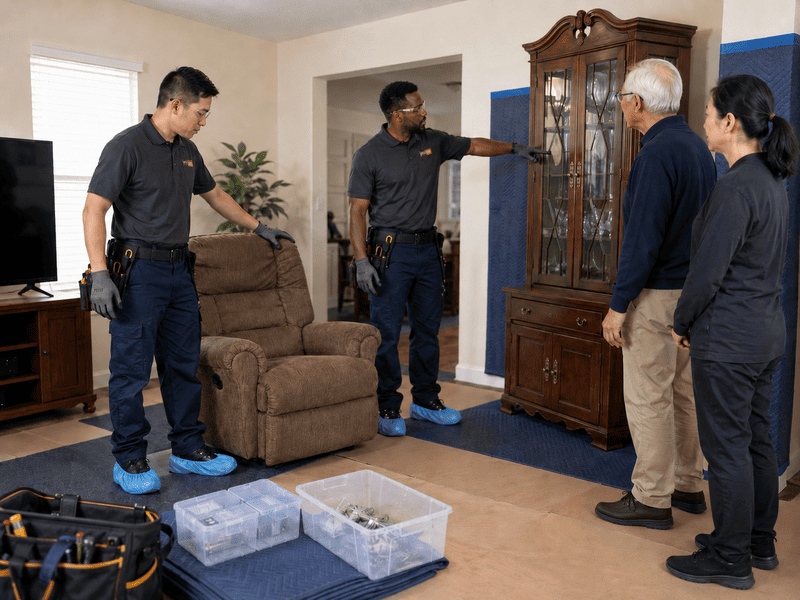
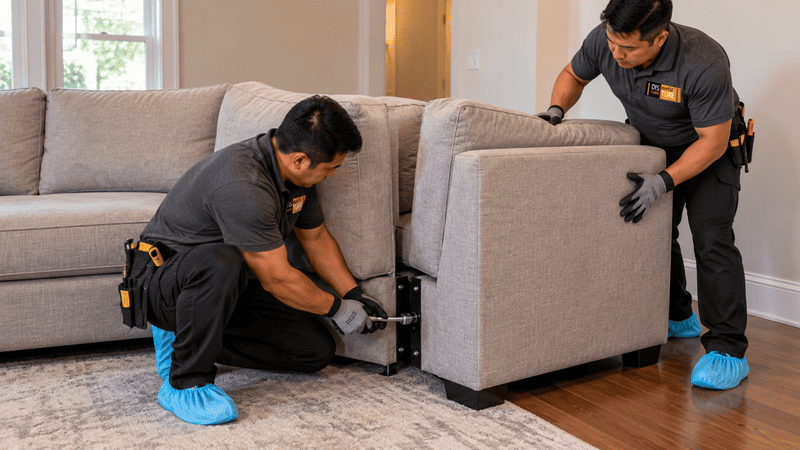
Bulky living-room pieces often require sectional separation, hardware access, controlled lifting, component wrapping, and route planning for hallways, doorways, stairs, and elevators.
- Massive sectional sofas with hidden connector brackets
- Leather reclining couches with heavy mechanisms
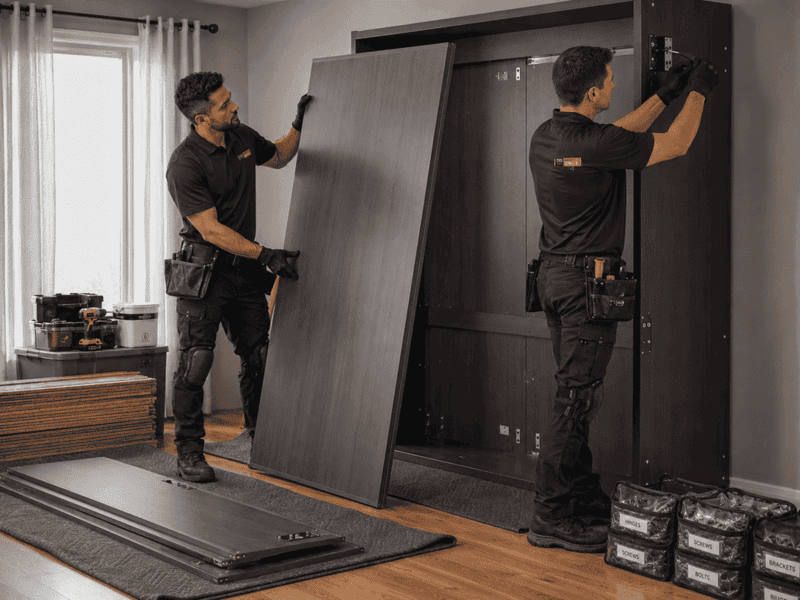
- Large wall entertainment centers
- Heavy slate pool tables
Entertainment centers deserve special attention because shelves, backs, and bridges connect in a set order. Crews experienced in wall unit dismantling services can separate these systems while keeping every panel matched and labeled.
Office Furniture Can Hide Complex Connections
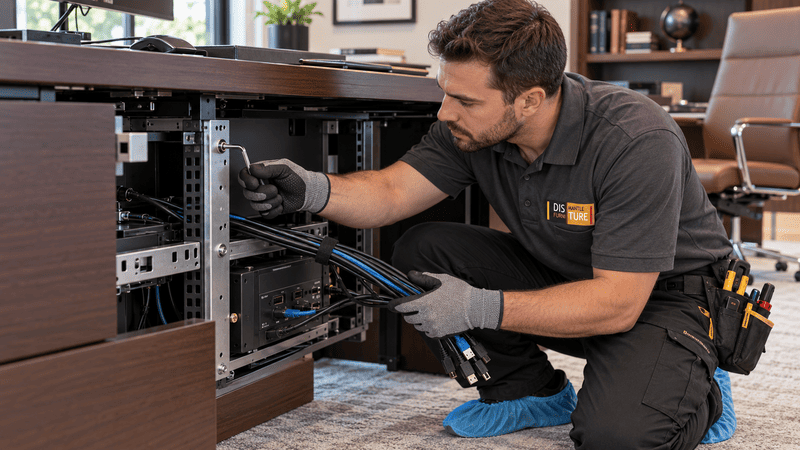
Office furniture can contain interconnected panels, hidden fasteners, cable-management parts, brackets, and modular components that should remain organized for relocation and later reassembly.
Typical pieces include:
- Large L-shaped desks
- Executive conference tables
- Heavy-duty lateral filing cabinets
- Modular cubicle workstations
Home offices in Northern Virginia condos often sit rooms away from the nearest elevator. Teams familiar with moving furniture between floors know how to keep grommets, brackets, and modesty panels grouped by workstation.
Protect Fragile Furniture Before It Leaves the Room
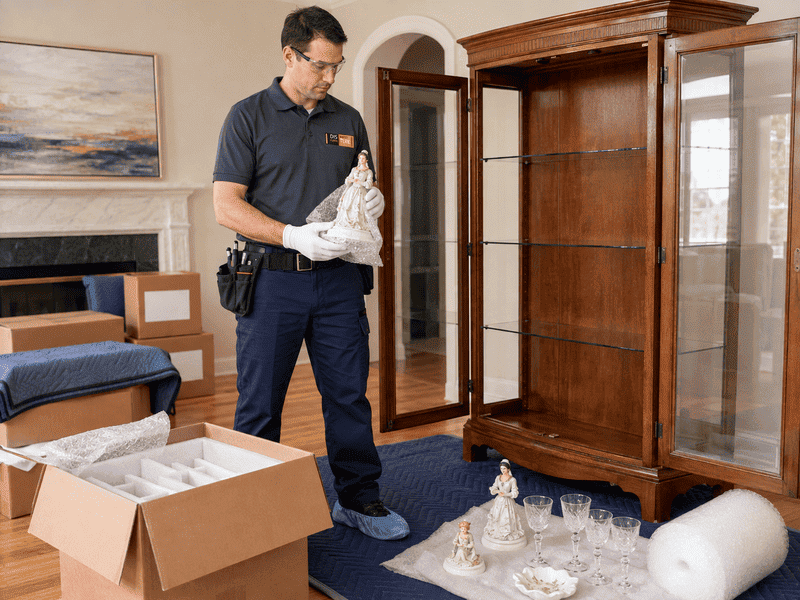
Fragile items may require different disassembly methods, protective wrapping, careful hardware storage, and component separation. Not every antique, glass piece, or fragile item can be dismantled safely without inspection.
Items needing extra preparation:
- Custom glass-top dining tables
- Oversized wall-mounted mirror matrices
- Fragile antique timber wardrobes
Glass components may need corner protectors and rigid separation from other parts. For delicate display pieces, fragile glass furniture protection methods help reduce contact damage during handling and loading.
Organize Every Bolt, Bracket, and Hardware Piece
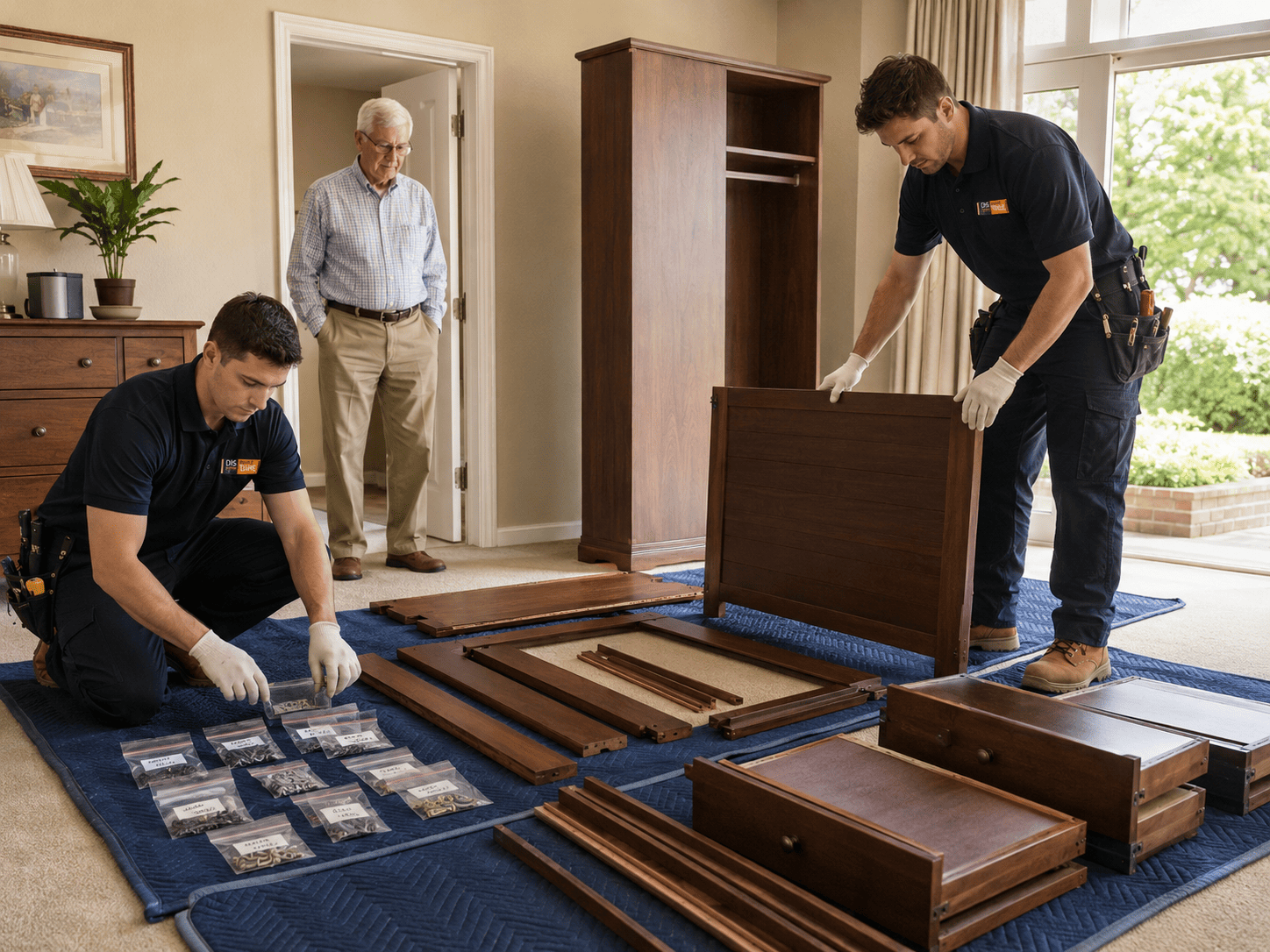
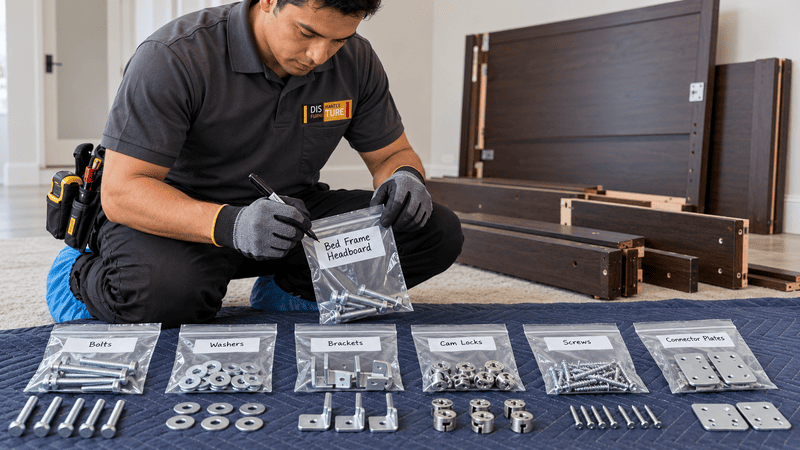
Screws, bolts, brackets, cam fittings, connectors, and specialty fasteners should remain organized by furniture piece. Poor hardware organization can complicate reassembly after relocation more than almost any other mistake.
Good hardware habits include:
- Labeling components as they come off
- Separating hardware kits by furniture piece
- Bagging specialty fasteners immediately
- Marking matching panels
- Keeping brackets together
- Tracking left and right components
- Keeping instructions when available
Tight Hallways Can Change the Moving Plan
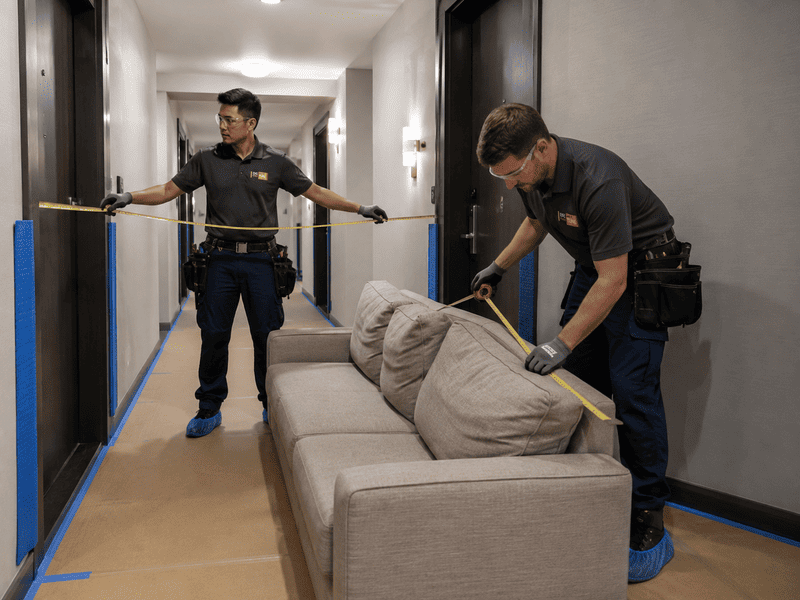
Furniture should be evaluated against the route it must travel before anyone lifts it. Partial or full disassembly can make large pieces easier to move through restrictive spaces, though no piece fits every property.
Measure or assess:
- Doorways and hallways
- Stairways and landings
- Elevators and tight condo corridors
- Sharp corners and low ceilings
- Loading areas and vehicle access
Renters in Washington, DC apartment buildings and condo residents across Delaware face these constraints daily. Planning for moving through tight hallways early prevents door-frame contact and last-minute teardown in a stairwell.
What Professional Furniture Disassembly Looks Like
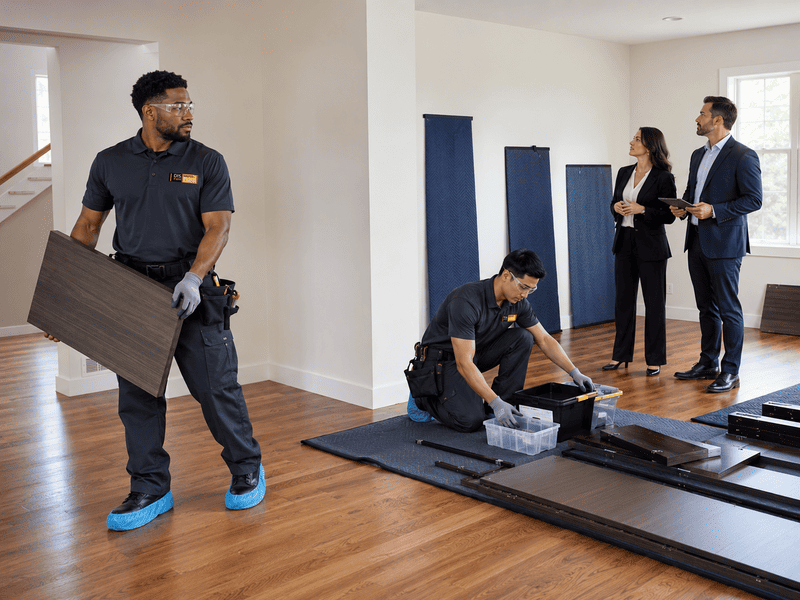
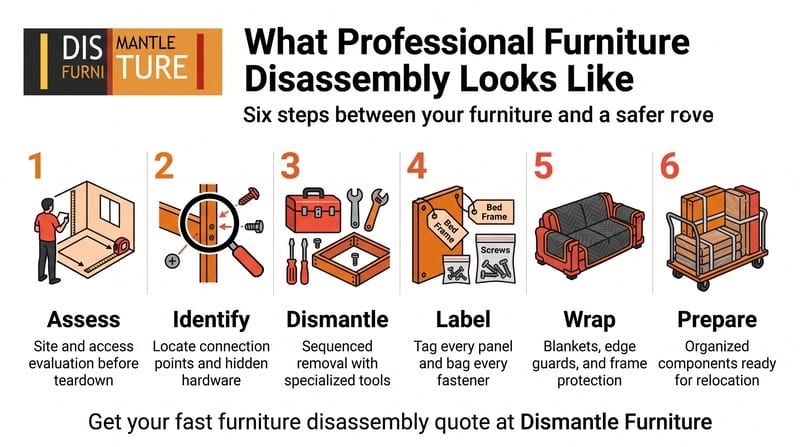
Professional furniture disassembly means systematically separating furniture components, organizing hardware, protecting individual parts, and preparing the furniture for controlled relocation and later reassembly.
A typical visit covers:
- Site and access evaluation
- Hardware identification and sequenced removal
- Component labeling and hardware bagging
- Moving blankets and protective wrapping
- Glass, edge, panel, and frame protection
- Hardware containment for transport
Why DIY Furniture Teardown Can Become Expensive
Rushed or incorrect teardown creates avoidable problems. Some furniture relies on specific connection points, hidden hardware, or manufacturer assembly order, and forced removal can damage parts that cost far more to fix than the teardown itself.
| Common DIY Mistake | Likely Result |
|---|---|
| Forcing a stuck fastener | Stripped screws or rounded bolt heads |
| Wrong disassembly sequence | Split wood or cracked compressed panels |
| Prying cam-lock fittings | Damaged fittings and bent brackets |
| Skipping labels and bags | Lost specialty hardware, hard reassembly |
| Rushed lifting and carrying | Scratched flooring, wall scuffs, door-frame contact |
Damaged panels and broken dowels often rank among household repair warning signs that homeowners ignore until furniture wobbles after the move. When pieces are genuinely heavy, furniture lifting tool guidance shows why controlled handling matters. Professional service can reduce many of these errors, though no approach prevents every possible type of damage.
Professional Disassembly Can Simplify Moving Day
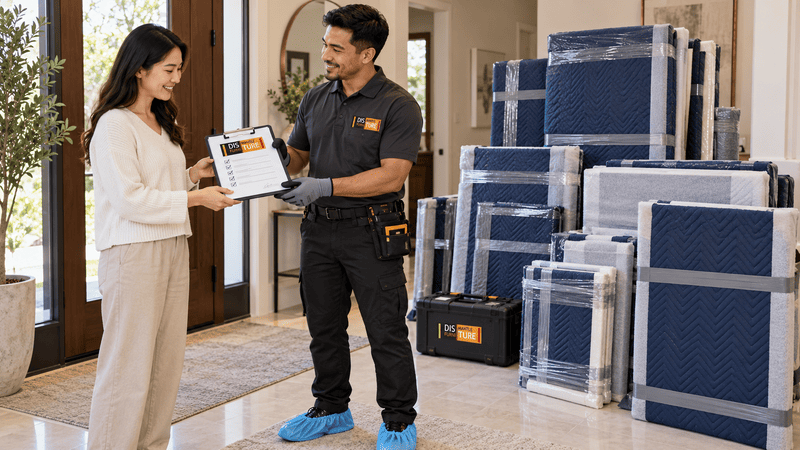
Homeowners often choose professional furniture disassembly when a project involves heavy components, large footprints, hidden fasteners, tight access routes, or limited time.
Situations where expert help is practical:
- Wall-mounted furniture and large beds
- Sectional furniture and office systems
- Fragile panels needing extra preparation
- Moves requiring multiple installers
- Projects with physical strain or tight timelines
Why Choose Our Team
Dismantle Furniture is fully licensed and insured and provides professional support for residential and relocation furniture teardown. Our technicians bring specialized disassembly tools, understand wood and metal joints, pre-drilled connection points, and compressed panels, and use hardware labeling, organized hardware kits, moving blankets, and heavy frame protection with wall and property awareness. This approach helps reduce teardown guesswork, supports organized furniture disassembly, and helps prepare furniture for controlled relocation through clean work practices and coordinated project planning.
For larger relocations, our professional relocation project support pairs well with professional moving service support on loading day. It also helps to understand moving liability protection guidance before any carrier handles your shipment.
Request a Professional Furniture Disassembly Quote Today
Identifying connection points, dismantling furniture correctly, labeling hardware, protecting components, and preparing each piece for relocation is what our crews do every day. You can request a disassembly estimate in minutes. To see how we prepare heavy pieces for transit, explore our furniture teardown services page.
Book Your Expert Teardown Team
Homeowners, renters, movers, and residential organizers across Washington, DC, Maryland, Delaware, Pennsylvania, and Northern Virginia can contact Dismantle Furniture today for a fast furniture disassembly quote or to schedule an expert moving preparation team.
Frequently Asked Questions
Should large furniture be disassembled before moving?
In most cases, yes. Partial or full teardown makes oversized pieces easier to carry through doorways, stairs, and elevators.
What furniture usually needs disassembly?
Beds, sectionals, wall units, large desks, and modular office systems are the most common candidates.
How do movers keep furniture hardware organized?
Technicians label components, bag specialty fasteners by furniture piece, and keep brackets and matching panels together.
Can sectional sofas be taken apart for moving?
Most sectionals separate at connector brackets between seats, though the method varies by model.
Should wardrobes be disassembled before relocation?
Large or fragile wardrobes usually benefit from teardown after an inspection of joints, panels, and mounting points.
How should fragile furniture be prepared for moving?
Fragile components may require additional preparation, including protective wrapping, rigid separation, and careful hardware storage.
Can furniture be disassembled in a small apartment?
Usually, yes. Technicians need enough clear workspace around the piece for controlled disassembly.
When should I hire professional furniture disassembly services?
Consider professional furniture disassembly when pieces are heavy, complex, fragile, or must travel through tight access routes on a deadline.
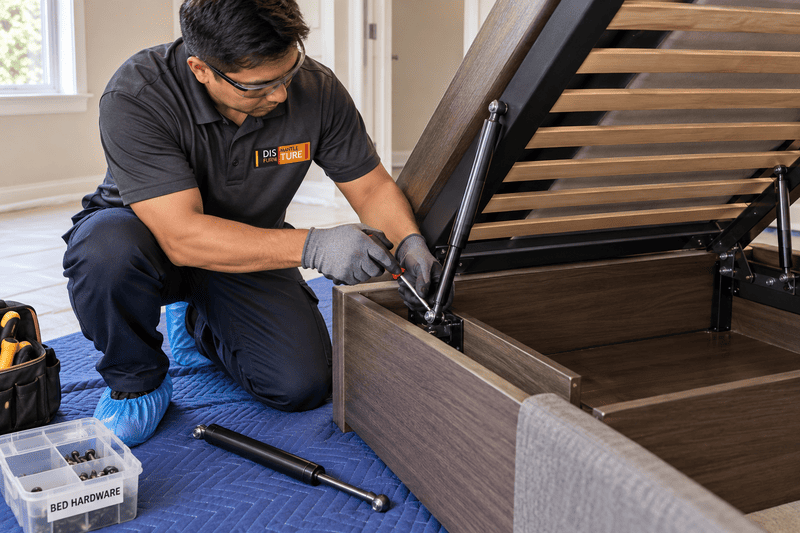
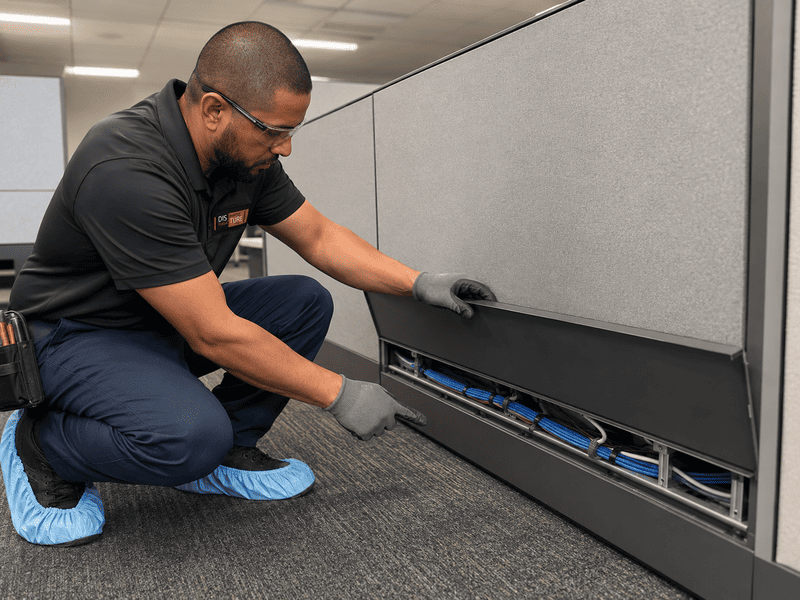
Reconfigure Your Modular Office Layout Flawlessly with Our Professional Cubicle Breakdown and Repair