Reconfigure Your Modular Office Layout Flawlessly with Our Professional Cubicle Breakdown and Repair
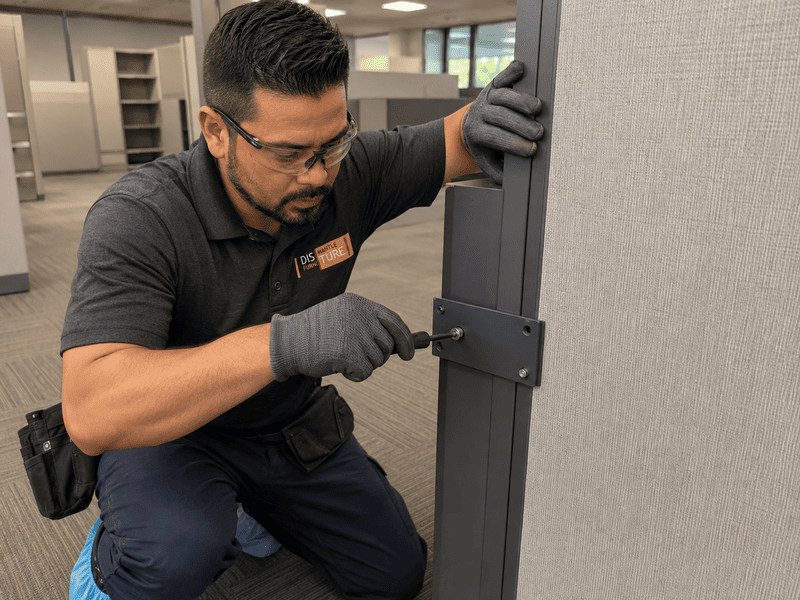
Cubicle breakdown and repair helps offices reconfigure modular workstations by removing panels in sequence, organizing hardware, protecting raceways, repairing worn parts, and preparing each component for cleaner reinstallation. The right plan depends on cubicle brand, panel height, glass inserts, work surfaces, electrical raceways, data routing, hardware condition, floor plan, moving distance, employee schedule, and whether hauling, storage, or reassembly is part of the project.
- Cubicles should be disassembled in a controlled sequence
- Hidden raceways need early planning and protection
- Loose brackets and locking pins should be inspected before rebuild
- Reconfigured layouts can improve workspace flow
- Professional crews help reduce office disruption during changes
Office Cubicles Are Built to Connect Not Come Apart Easily
Cubicle breakdown and repair works best when commercial workstations are treated like connected systems, not simple furniture. Panels, brackets, work surfaces, glass, trim, and hardware often come apart in a specific order, so rushed DIY removal can create missing parts, utility confusion, and reopening delays.
From the outside, a cubicle row may look easy to separate. In practice, many modular systems are tightly connected through frames, privacy panels, pedestals, raceways, and metal fasteners. When internal staff force parts apart, stripped connectors, scratched frames, and misplaced hardware often follow.
That problem grows during department moves, hybrid office changes, and shared workspace updates. A professional crew handles office cubicle disassembly for reconfiguration with a practical plan, so the breakdown supports a cleaner rebuild instead of creating more repair work.
Modular Panels Need a Careful Breakdown Sequence
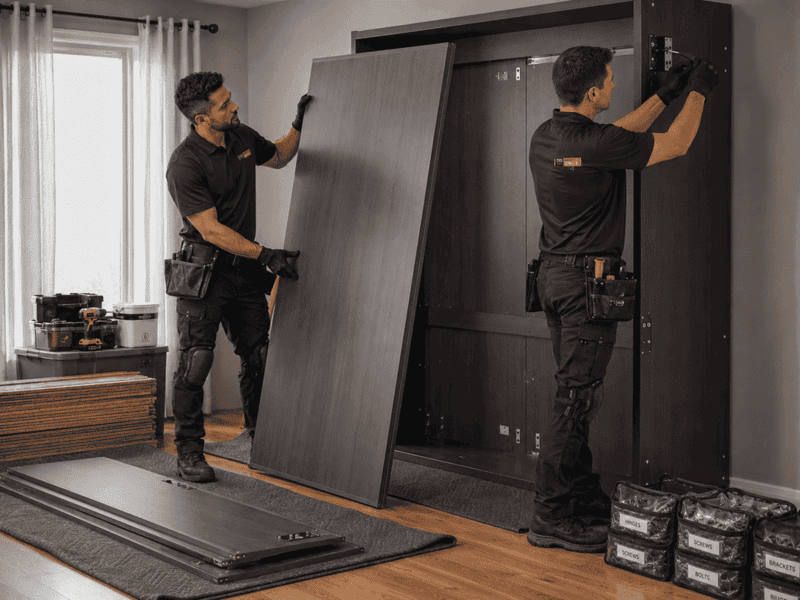
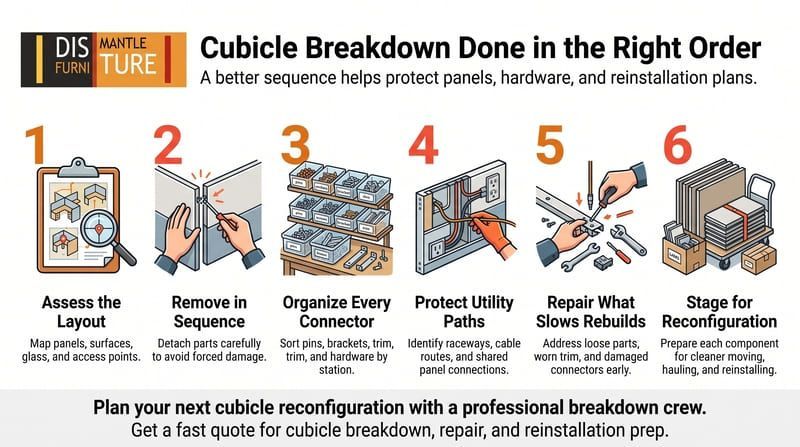
A proper cubicle breakdown and repair plan starts with the right sequence. Crews identify panel runs, disconnect work surfaces, remove trim, release connectors, and separate frames in a controlled order that helps reduce avoidable damage to glass inserts, brackets, and hardware.
Typical breakdown steps include:
- Confirm panel runs, heights, and workstation groupings
- Remove loose accessories, shelves, and overhead storage first
- Detach work surfaces and supporting brackets in sequence
- Separate privacy glass and trim before major panel movement
- Bag connectors, locking pins, and fasteners by station
- Stage panels for repair, hauling, storage, or reinstallation
This approach matters whether a business is reshaping cubicle rows, opening walking paths, or converting closed stations into pods. It also supports office furniture disassembly for workstations when desks, storage pieces, and attached surfaces need to be handled with the cubicle system.
For teams comparing footprints before a reset, even modular office systems for planning show how many connected pieces must align correctly before a layout works well again.
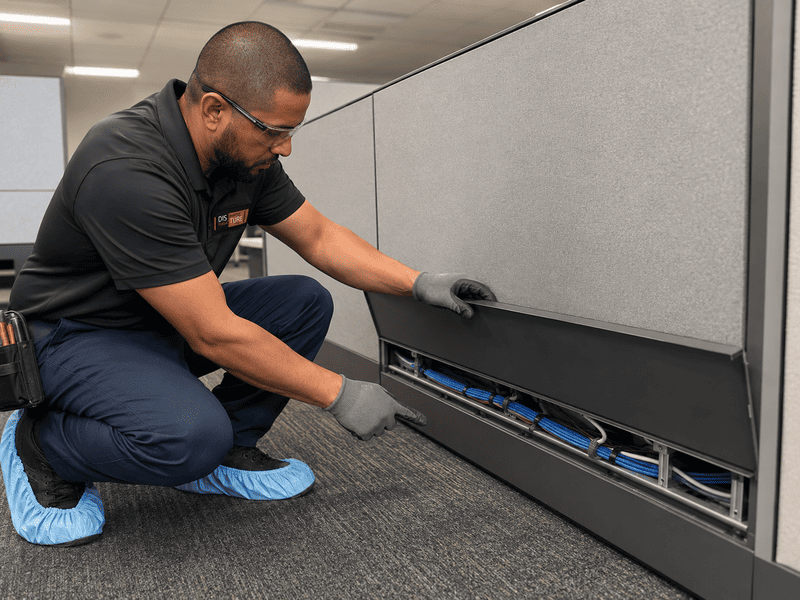
Hidden Raceways Can Complicate the Reconfiguration
Hidden power paths and data routes can complicate cubicle reconfiguration long before the first panel is moved. Some systems include built-in raceways, wire channels, cable trays, and data lines that need to be identified early so parts can be protected, separated, and prepared for coordinated reinstallation.
A short definition helps here. Cubicle breakdown and repair means taking modular office workstations apart in sequence, labeling components, protecting panels and raceways, repairing worn parts when possible, moving the pieces carefully, and preparing the system for a cleaner reconfiguration or reinstallation.
Key raceway concerns include:
- Base raceways behind panel covers
- Cable trays under work surfaces
- Data routing between clustered stations
- Power feeds serving multiple cubicle runs
- Utility points near glass and corner panels
Electrical or live wiring work should be handled by qualified professionals when required. Dismantle Furniture can help protect and organize these paths during prepare office furniture for reinstallation, which may support smoother coordination with building teams and licensed trades.
Damaged Pins Brackets and Trim Should Be Repaired Early
Early inspection helps prevent small component issues from slowing down the entire rebuild. During cubicle breakdown and repair, technicians can tighten loose brackets, sort usable connectors, identify damaged parts, and prepare worn panels for reinstallation before those issues spread across the floor plan.
On-site repair priorities often include:
- Loose or misaligned brackets
- Broken locking pins when replacements are available
- Worn trim that no longer seats properly
- Bent connectors and damaged joining hardware
- Scratched frames that need reconditioning review
This is where a true cubicle repair service adds value. Instead of moving damaged parts from one problem area to another, crews can flag modular workstation repair needs while stations are already apart. For growing companies and corporate offices, that reduces guesswork later and supports cleaner coordination with modular office furniture installation services when the new setup phase begins.

Old Cubicle Layouts Can Block Better Office Flow
Outdated cubicle footprints can limit circulation, crowd departments, and create awkward gaps that no longer match how teams work. Reconfiguring the layout can help improve office flow by supporting collaborative pods, quieter focus zones, clearer team clusters, and more open walking paths.
What layout changes often accomplish
Office managers and HR teams often need a layout that fits hybrid schedules, headcount shifts, or new department adjacencies. Reconfiguration can help create cleaner paths between entrances, meeting rooms, and shared equipment without overbuilding the floor.
| Layout Issue | Reconfiguration Goal | Practical Result |
|---|---|---|
| Long closed cubicle rows | Smaller team clusters | Easier circulation |
| Oversized private stations | Shared pods | Better space use |
| Congested aisles | Wider walking paths | Cleaner movement |
| Mixed panel heights | Focus and collaboration zones | More flexible planning |
Before a move, facility coordinators may also need loading dock and elevator clearance planning so the new layout is supported by realistic building access from the start.
Component Labeling Keeps the Rebuild From Slowing Down
Labeling panels and hardware keeps the rebuild from becoming a sorting project. When crews tag panel groups, hardware bags, work surfaces, pedestals, and connector sets clearly, office workstation reconfiguration moves faster and with less confusion during staging, transport, and reassembly.
Useful labeling practices include:
- Number panels by station or department
- Match hardware bags to panel labels
- Separate glass inserts from solid panels
- Mark left and right work surfaces
- Flag damaged parts for repair or replacement review
For relocation planners and business owners, that organization matters during phased moves, swing-space projects, and partial reconfigurations. It also supports home office furniture setup help and productive home office furniture assembly when a broader workplace strategy includes remote or executive off-site setups.
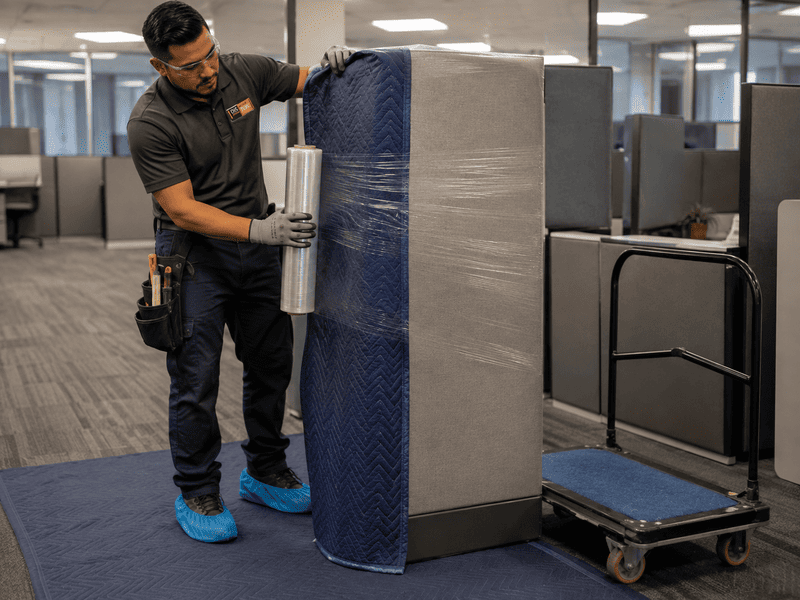
Moving and Hauling Require Protection for Every Panel
Moving and hauling only works well when each panel, surface, and connector is protected before transport begins. Commercial cubicle breakdown is not just about taking stations apart. It also involves staging, stacking, wrapping, and loading components so they stay organized and easier to reinstall.
Protection steps often include:
- Padding privacy glass and finished panel faces
- Separating metal fasteners from delicate trim
- Keeping hardware bags attached to labeled groups
- Staging work surfaces by size and destination
- Loading heavier frames to limit shifting in transit
Companies planning moving and hauling service for panels should also understand moving liability protection for businesses and broader lost or damaged household goods guidance because protection planning, handling practices, and project scope all affect risk.
Professional Crews Help Reduce Business Disruption
Professional cubicle breakdown and repair helps reduce the work hours internal staff may lose when they try to decode manuals, sort hardware, separate connected panels, and rebuild stations between normal business tasks. A structured crew schedule supports better pacing during office changes.
Common disruption reductions come from:
- Breaking down by department or zone
- Working around employee schedules when possible
- Staging parts for faster next-step decisions
- Separating repair items before reinstallation day
- Coordinating hauling, storage, and rebuild timing
That is especially useful for operations directors managing shared workspaces, commercial property managers preparing suites for new occupancy, or business owners balancing daily activity with layout changes. Broader workplace needs can also overlap with desk chair and storage assembly demand and home office organization for better workflow as companies support mixed on-site and remote teams.

A Smarter Floor Plan Starts With Organized Disassembly
A smarter floor plan starts with organized disassembly because the quality of the rebuild depends on how well every panel, bracket, and raceway was handled at the beginning. Good breakdown work supports better sequencing, cleaner staging, more accurate repair decisions, and a more practical reconfiguration plan.
Why decision-makers outsource this work
Office managers, facility coordinators, and relocation planners usually need more than labor. They need a crew that can inspect conditions, separate damaged from reusable parts, coordinate component flow, and prepare stations for next steps. Dismantle Furniture provides complete furniture dismantling service support for small businesses, corporate offices, shared offices, and growing organizations that want quick estimates and a more organized path through office layout reconfiguration.
Schedule a Cubicle Breakdown and Repair Consultation Today
Professional cubicle breakdown and repair can help reduce panel damage, missing hardware, hidden raceway issues, layout delays, staff downtime, and reinstallation confusion before they spread across the project. If your office change also involves cleanout planning, surplus handling, or special access concerns, related needs may include disposal recycling help or even space-conscious planning ideas such as small driveway basketball hoop installation when tight access becomes part of a broader property conversation.
Request a Commercial Cubicle Reconfiguration Quote
Office managers, facility coordinators, and business owners can request a cubicle repair estimate or schedule a commercial consultation with Dismantle Furniture for office cubicle disassembly, component repair, moving and hauling, office furniture disassembly, reinstallation preparation, and complete dismantling service support.
Frequently Asked Questions
What is cubicle breakdown and repair?
It is the organized disassembly, inspection, repair, labeling, and movement of modular cubicle components before reinstallation or layout changes.
Can modular cubicles be reconfigured instead of replaced?
Yes. Many systems can be reconfigured if panels, connectors, work surfaces, and hardware remain usable for the new floor plan.
Why should cubicle panels be labeled during disassembly?
Labels help crews match panels, hardware, and surfaces during staging and rebuild, which can reduce confusion and lost time.
Do cubicle systems have hidden wires or data raceways?
Many do. Built-in power paths, wire channels, and data raceways should be identified early and coordinated carefully during breakdown.
Can broken cubicle pins or trim be repaired?
Often, yes. Loose brackets, worn trim, and some damaged locking pins can be addressed on-site when parts and conditions allow.
How can cubicle reconfiguration improve office flow?
It can support clearer walking paths, better department groupings, collaborative pods, and quieter focus areas based on the available footprint.
Should employees disassemble office cubicles themselves?
Usually, that is not the best use of staff time. Cubicle systems are technical assemblies, and rushed internal breakdown can create avoidable damage and delays.
When should a business request a cubicle repair estimate?
Request an estimate as soon as a reconfiguration, department move, office downsizing, or workstation reset is being planned so breakdown, repair, and hauling can be scheduled properly.