How Professional Furniture Disassembly Protects Heavy Pieces During a Long Distance Move
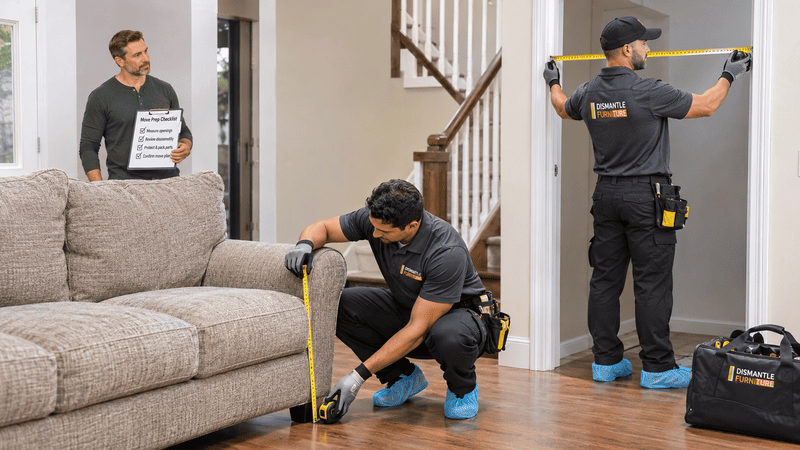
Professional furniture disassembly prepares bulky furniture for transport by removing suitable components, labeling parts, organizing hardware, reducing awkward dimensions, and planning reassembly. The approach depends on furniture construction, access routes, removable components, hardware, destination needs, and manufacturer guidance where available.
- Remove suitable components before transport.
- Label furniture parts clearly.
- Keep hardware organized by item.
- Protect separated panels and sections.
- Plan reassembly before the move begins.
Large Furniture Becomes a Moving Problem Fast
Large furniture becomes harder to move when its dimensions conflict with stairs, doorways, elevators, or loading areas. For a long-distance relocation, professional furniture disassembly can reduce awkward dimensions and separate suitable components. However, the right approach starts with checking construction and the full exit route.
A wardrobe may sit comfortably in a bedroom yet leave little turning space outside its door. Likewise, forcing a full-size sofa, wall unit, or bed frame through restricted access can mean repeated repositioning. That handling can place avoidable stress on furniture joints, walls, and door frames.
Instead, assess which parts can come off before moving day. Organizing those components and their hardware supports more manageable transport preparation and later reassembly.
Measure Furniture Against the Entire Exit Route
Compare furniture width, height, and depth with more than the nearest doorway. A piece must also clear corners and turns.
- Doorways and entry doors: Measure the usable opening, including projecting handles and trim.
- Hallways and corners: Check turning room for long frames and large sections.
- Stairs and landings: Consider overhead clearance, railings, and changes in direction.
- Elevators: Compare the door opening and cabin dimensions with each planned section.
- Loading areas: Allow room to turn, stage, and transfer wrapped components.
Just like in a Washington, DC apartment exit may involve a narrow hall before the elevator. Removing suitable sofa legs or arms might help, but not every frame allows it.
When Heavy Furniture Needs Professional Assessment
Oversized sofas, heavy bed frames, and multiple large pieces can make moving-day decisions harder. Tight staircases and furniture with many connectors add further challenges.
Professional help can reduce moving-day guesswork, especially during interstate moves or senior relocations. Still, construction should determine the method, not pressure to make every piece smaller.
Flat Packing Starts With the Right Pieces
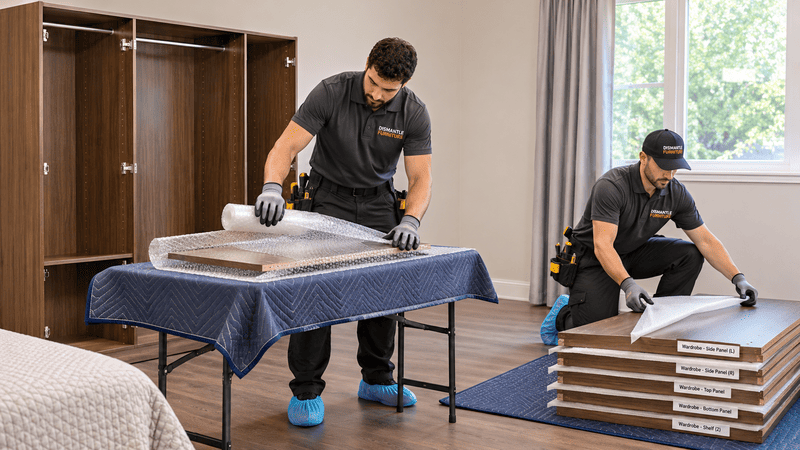
Custom flat-packing groups suitable furniture components into protected, labeled packages for transport and later assembly. It may involve removing shelves, doors, legs, arms, or bed rails. However, furniture construction determines whether flat-packing is practical, and some pieces need only partial disassembly.
Professional furniture disassembly means separating suitable furniture components, organizing hardware, labeling parts, and preparing pieces for transport and later reassembly.
Flat-packing is a specific preparation method within that process. It does not mean every item should become a stack of loose boards. For instance, a modular wardrobe may separate into panels, while a glued cabinet may need to remain largely intact.
Group Panels Without Losing Their Identity
For suitable furniture, a flat-packing plan can include:
- Removing detachable shelves, doors, legs, arms, bed rails, and separate sections.
- Labeling matching panels before protective wrapping hides their details.
- Grouping components by furniture item, with padding between finished surfaces.
- Packaging hardware separately while keeping it associated with its furniture.
- Arranging packages around transport order and the expected assembly sequence.
A Maryland family moving to Pennsylvania might label wardrobe parts “Bedroom 2, Wardrobe A.” That label remains useful after several furniture packages reach the same unloading area.
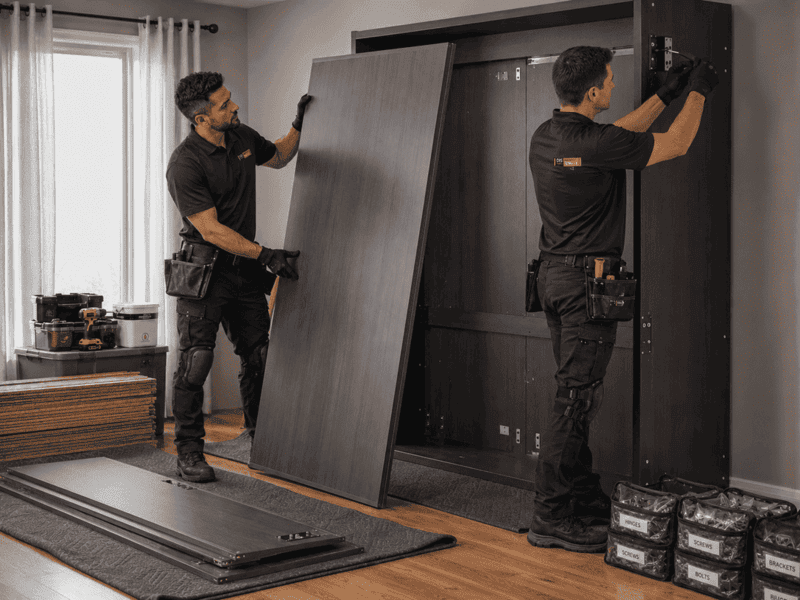
For tall storage furniture, professional wardrobe disassembly can help identify removable components and organize panels for transport.
Where manufacturer instructions exist, keep them with the project records. Also, flag swollen panels, cracked joints, or previous repairs before anyone starts dismantling.
Hardware Organization Matters After Every Mile
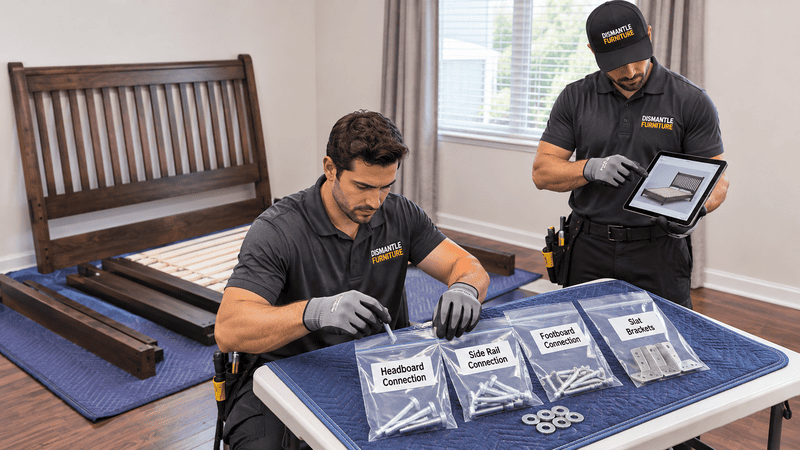
Hardware organization keeps each furniture item’s fasteners and fittings connected to the correct components. During long-distance moves, clearly labeled bags and item-specific packaging help preserve that connection through loading, transport, and unloading. Mixing hardware from several pieces can make later assembly slower and more confusing.
Similar-looking bolts may serve different joints. Likewise, washers, brackets, and pins can become difficult to identify once someone empties several bags together.
The aim is to preserve the original hardware arrangement, not alter manufacturer hardware or improvise substitutions.
Give Each Hardware Bag a Clear Identity
A useful furniture hardware organization system includes:
- Item identification: Write the furniture name, item code, and destination room.
- Connection details: Separate screws, bolts, washers, and brackets by their original location.
- Small fittings: Contain pins, cam fittings, hinges, connectors, handles, and other fasteners.
- Reference records: Photograph unusual connections and note which fittings belong together.
- Secure grouping: Place smaller labeled bags inside an item-specific hardware container.
For example, keep wardrobe door hinges separate from shelf fittings, even when both belong to the same unit. A label such as “Wardrobe A, left door” gives more guidance than “wardrobe screws.” Avoid loose hardware inside drawers or wrapping folds. Instead, agree who will keep the hardware container and where it will travel.
Before loading, compare the bags with the component list. If something was already missing, record that fact while the original layout remains clear.

Different Furniture Needs Different Disassembly
Different furniture categories need different methods because their frames, joints, fittings, and weight distribution vary. A sectional may separate at designed connectors, while a wardrobe may require staged panel removal. Therefore, assess each item individually rather than assuming every large piece can be fully dismantled.
The goal is suitable component removal, not maximum teardown. Some frames contain glued joints, concealed fixings, or repairs that make further separation unsuitable.
| Furniture type | Components that may separate | Main preparation consideration |
|---|---|---|
| Sofas and sectionals | Legs, removable arms, modular sections | Identify designed connections and any reclining mechanisms |
| Wardrobes and armoires | Doors, shelves, rails, panels | Track panel positions and protect mirrored sections |
| Wall units | Doors, shelves, cabinet sections | Assess wall attachments and support before removal |
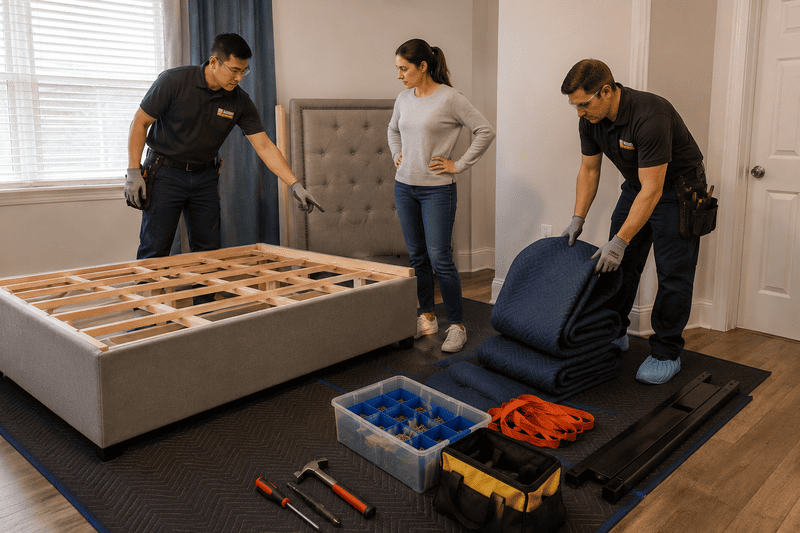
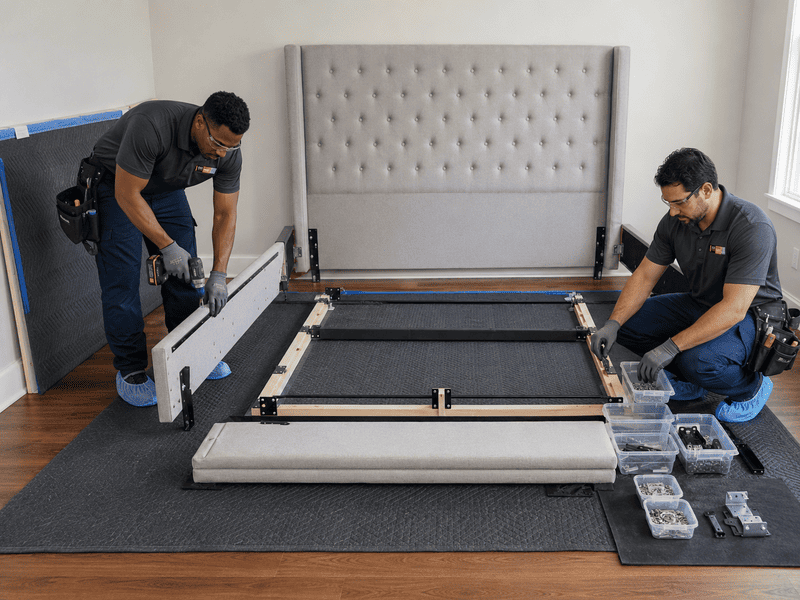
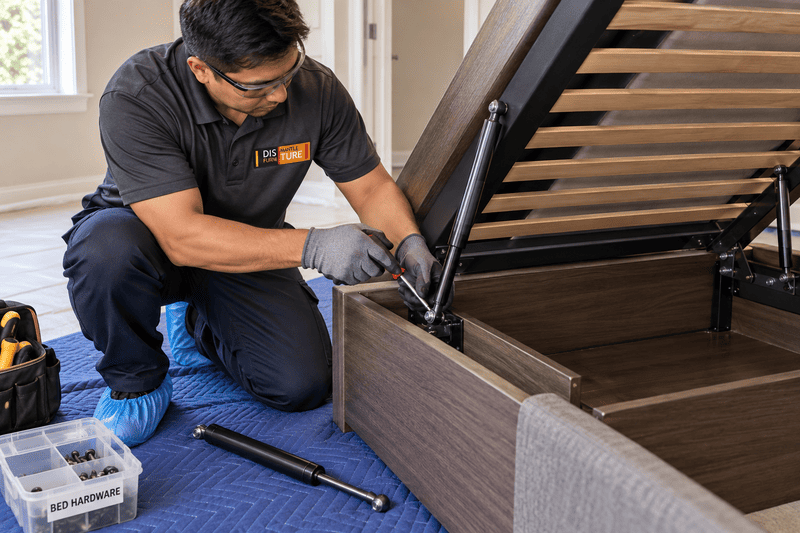
| Beds | Rails, slats, headboards, footboards | Match corner fittings and record rail orientation |
| Shelving and large cabinets | Shelves, doors, detachable sections | Check bracing, fixed joints, and panel condition |
For a deep sofa, professional sofa disassembly services begin with understanding its construction and access challenge. Removable legs may be enough; other designs need more involved work.
Meanwhile, wall unit dismantling services address connected sections and wall attachments. Built-in features may require a different scope from freestanding furniture.
Why Choose Our Team for Furniture Preparation
Dismantle Furniture provides residential disassembly and move-preparation support for homeowners, renters, families, seniors, and property managers. The team handles sofa disassembly, wardrobe dismantling, wall-unit disassembly, and suitable furniture flat-packing. Hardware organization, component labeling, and reassembly planning help reduce furniture-moving guesswork.
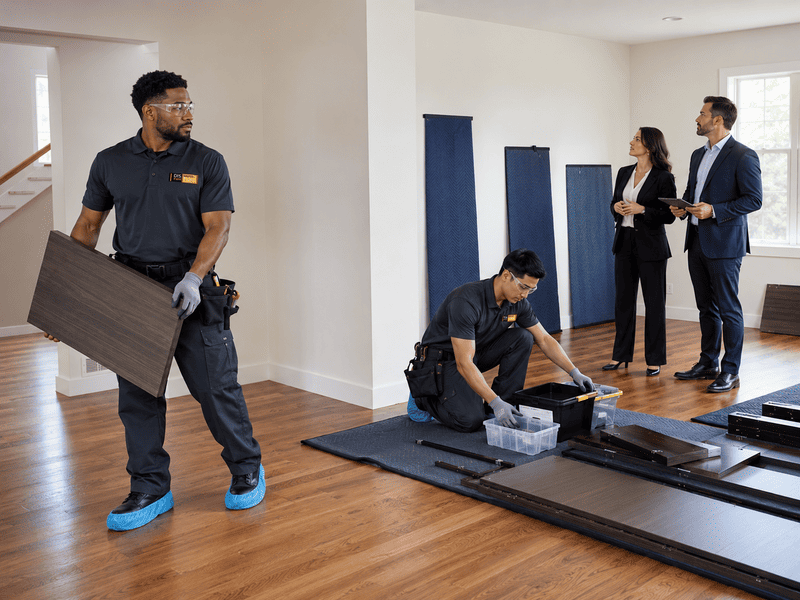
For large furniture handling, clean work practices include floor protection and organized staging areas. Professional project coordination helps keep furniture sections and hardware matched while clarifying responsibilities before moving day.
Transport Preparation Goes Beyond Taking Things Apart
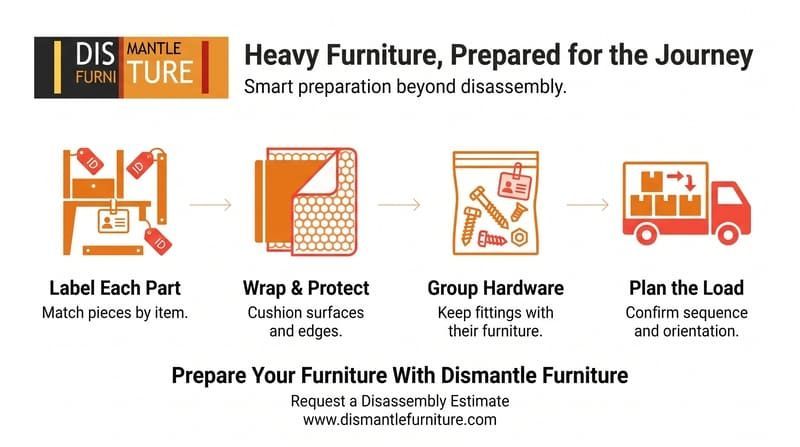
Disassembled furniture still needs suitable wrapping, edge protection, secure grouping, and a loading plan. Separating components can make bulky furniture easier to handle, but it does not replace careful packing or transport practices. Protection also depends on loading conditions, restraint, handling, and the furniture’s condition.
A narrow wardrobe panel may clear a stairwell more easily than the assembled unit. However, its exposed edges and finished surfaces still need attention. Similarly, removing sofa legs does not make upholstery resistant to rubbing. Furniture moving preparation must address the newly exposed components as well as the remaining frame.
Prepare Components for Loading and Unloading
Before furniture leaves the property:
- Label each component and its protective wrapping with matching item codes.
- Wrap finished surfaces and protect vulnerable panel edges and corners.
- Separate removable glass where appropriate, using suitable packaging and handling.
- Keep matched sections together and identify the corresponding hardware container.
- Add destination room labels and keep reassembly instructions accessible.
- Agree on loading sequence, support, and transport orientation with the moving crew.
Orientation should follow the component’s construction and available guidance. Do not assume every panel should lie flat or every sofa should stand upright. When a Delaware household prepares for an interstate relocation, the disassembly plan should connect with the loading plan. Discuss furniture moving and hauling support when the project also involves transferring or repositioning heavy items.
Disassembly, packing, moving, and reassembly are distinct tasks. If separate providers handle them, confirm the handoff details. For loading and transport needs, professional residential moving services should receive the component list and handling notes before collection.
Reassembly Planning Starts Before Loading Day
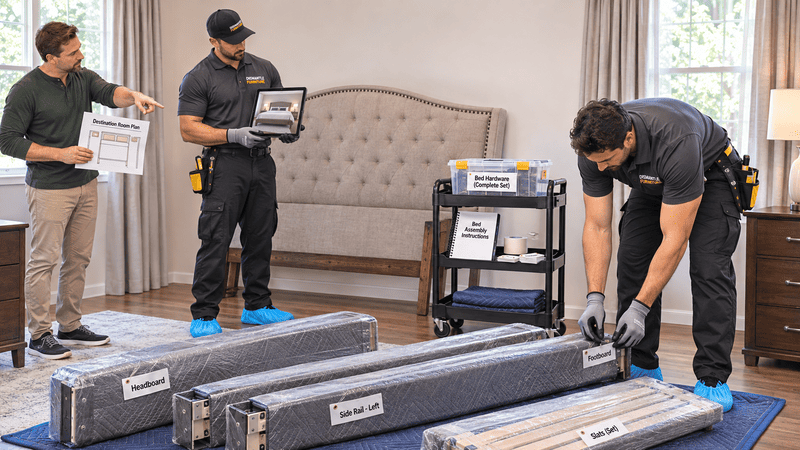
Reassembly planning records how furniture fits together, where it belongs, and what the destination requires. Before loading, identify panels, original orientation, hardware bags, and assembly order. Clear records can make destination setup more organized, especially when several similar pieces arrive together after an interstate move.
Photograph the assembled furniture and important connections before removal. Then record existing damage, missing components, and any parts that need assessment before reuse.
For a senior moving from Northern Virginia to Pennsylvania, familiar furniture placement may matter as much as room labels. Senior move furniture disassembly services can support component tracking and coordination with family members or caregivers.
Keep Destination Setup Details With Each Item
A practical reassembly plan should identify:
- The destination room and intended placement within it.
- Panel names, original orientation, and matching hardware bags.
- Reference photos, instructions, and the expected assembly order.
- Each fitting’s return location, including shelves, doors, and handles.
- Destination doorways, stairs, elevators, and space for reassembly.
- Missing components, existing damage, or unresolved repair needs.
Confirm who will perform reassembly and whether that work forms part of the requested service. Also, check destination wall requirements before reinstalling furniture that needs anchoring.
What Affects Furniture Disassembly Costs
Costs depend on furniture type, size, quantity, condition, and project scope. Construction complexity, removable components, and hardware tracking can change the work involved. Access also matters. Stairs, narrow halls, elevator arrangements, and limited working space may affect preparation needs.
Additionally, custom flat-packing, protective packing, reassembly planning, and moving-related services can expand the scope. Existing damage may require assessment before dismantling begins.
Send furniture photos, measurements, access details, and the requested work when seeking an estimate. These details help define the project without relying on a generic furniture price.
Book Professional Furniture Disassembly
Access planning, component removal, flat-packing, hardware organization, labeling, and reassembly preparation work best as one coordinated plan. Arranging professional furniture disassembly before a long-distance move can help reduce avoidable stress on furniture and last-minute handling decisions.
Explore Dismantle Furniture’s professional furniture disassembly services to match the preparation work to your sofas, wardrobes, wall units, beds, or cabinets.
Prepare Heavy Furniture for Interstate Relocation
Homeowners, renters, families, seniors, landlords, and property managers can request a furniture disassembly estimate with Dismantle Furniture. Include photos, access measurements, destination details, and any packing or reassembly needs.
Services are available across Washington, DC, Maryland, and Northern Virginia, with service also available across Delaware and Pennsylvania. A clearly defined scope supports more organized long-distance move preparation.
Frequently Asked Questions
What furniture should be disassembled before a long-distance move?
Oversized beds, wardrobes, sectionals, and wall units may benefit when construction allows removal and access makes intact handling difficult.
Can sofas be taken apart for narrow doorways?
Some sofas have removable legs, arms, or sections, but construction determines which components can come off.
How should furniture hardware be organized during a move?
Keep hardware in sealed, labeled bags grouped by furniture item, with connection notes or photos where helpful.
Can wardrobes and wall units be flat-packed?
Some can, but panel construction, fixed joints, wall attachments, and condition determine whether flat-packing is suitable.
When should I book professional furniture disassembly?
Arrange professional furniture disassembly once your moving plan and furniture list are clear, allowing time to assess access.

Reconfigure Your Modular Office Layout Flawlessly with Our Professional Cubicle Breakdown and Repair