Sectional Sofa Disassembly Services for Apartments Condos and Tight Staircases
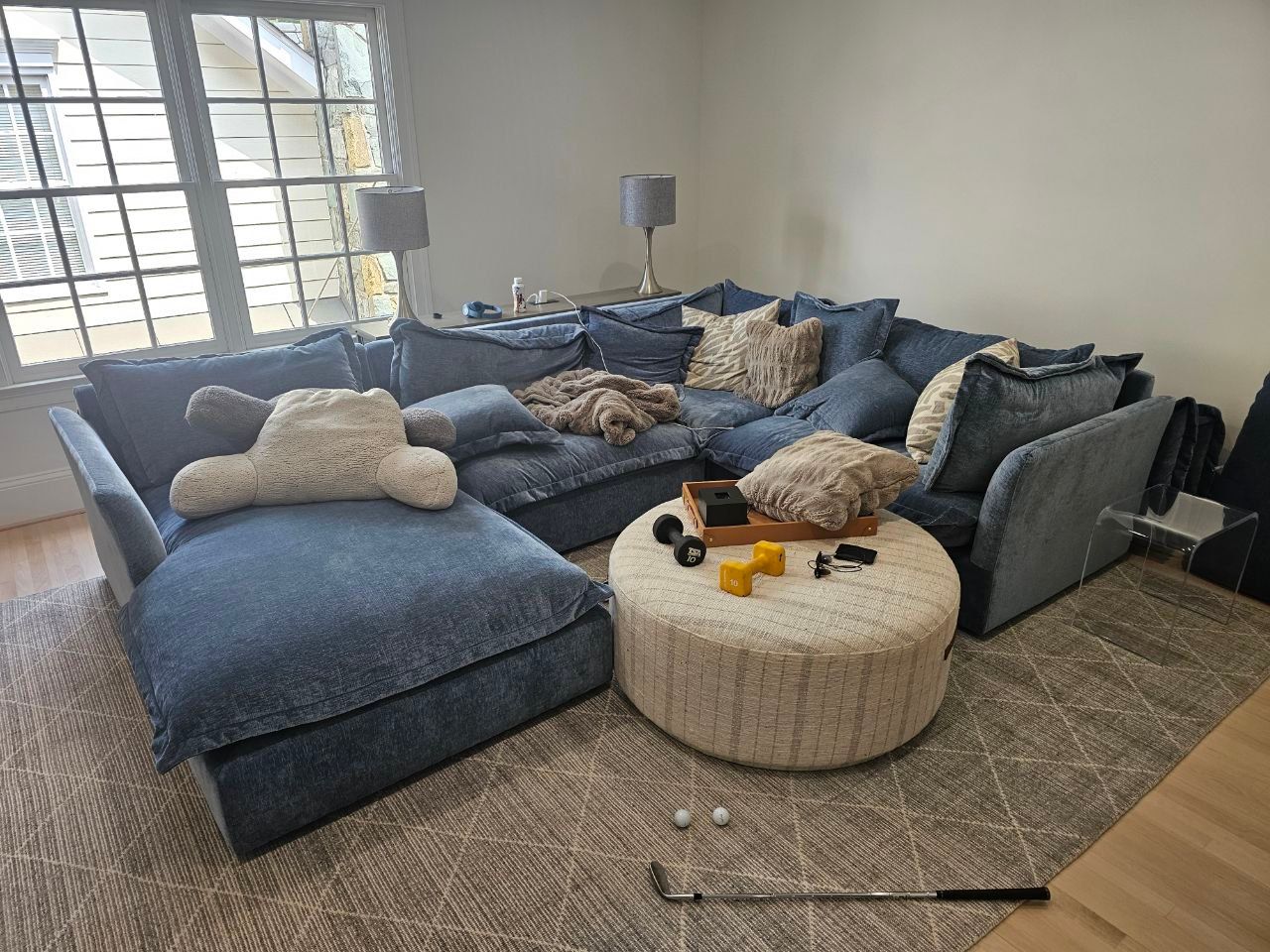
Sectional sofa disassembly helps prevent scraped walls, broken frames, and moving-day delays when large furniture has to pass through apartments, condos, elevators, and tight staircases. Taking the sofa apart creates safer angles, better control, and a much easier path.
- Safer transport through narrow spaces
- Easier access in elevators and hallways
- Less wall and frame damage
- Faster, smoother moving day
Oversized sectionals create problems fast in apartment and condo moves. What looks manageable in the living room can become a major obstacle at the front door, in the hallway, or halfway down a tight staircase. Once a sofa gets stuck, the risk of torn fabric, chipped walls, damaged railings, and delayed movers goes up quickly. That is why sectional disassembly is often the smartest solution. By separating bulky pieces, removing connecting hardware, and planning the route in advance, Dismantle Furniture helps make difficult moves safer, cleaner, and far more efficient.
Why Sectional Sofa Disassembly Helps During Apartment Moves
Sectional sofa disassembly makes apartment moves easier because smaller pieces are simpler to turn, lift, and protect in narrow spaces. Instead of forcing one oversized item through a tight route, movers can carry manageable sections with better balance and less risk.
Better clearance
With professional sectional sofa disassembly, each piece can move through doors, hallways, and stair landings without the awkward angles that usually cause damage.
Cleaner handling
This matters in high-rise buildings, older townhomes, and condo buildings where every turn is tighter than expected and one bad pivot can mark both the sofa and the wall.
What Types of Sectional Sofas Usually Need Disassembly
Most sectionals need disassembly when they are oversized, modular, or built with chaises, recliners, sleepers, or extra-deep seats. Many of the popular fabric sectionals people buy for smaller homes still become difficult once they reach a stairwell or elevator.
- L-shaped sectionals with long return pieces
- U-shaped layouts with multiple connectors
- Reclining sectionals with heavy mechanisms
- Sleeper sectionals with added internal weight
- Modular designs with irregular corners
Even sectional size variations that look apartment-friendly online can create moving problems when seat depth, arm width, and corner geometry meet real building constraints.
| Sectional Type | Common Moving Problem | Why Disassembly Helps |
|---|---|---|
| L-Shaped Sectional | Hard to turn through corners and narrow hallwaysHard to turn through corners and narrow hallways | Separates long sections for easier carrying |
| U-Shaped Sectional | Too wide for stair landings and apartment entries | Breaks the sofa into smaller manageable pieces |
| Reclining Sectional | Heavy frame and moving parts add bulk | Reduces weight and protects reclining mechanisms |
| Sleeper Sectional | Hidden bed unit makes the sofa heavier and deeper | Makes lifting safer and improves doorway clearance |
| Modular Sectional | Multiple connected pieces can shift awkwardly in transit | Allows organized transport piece by piece |
| Chaise Sectional | Extended chaise section creates clearance issues | Removes the longest section for tighter access |
How Tight Staircases and Elevators Create Moving Problems
Tight staircases and elevators limit angle, turning radius, and carrying position. A sectional that clears one doorway can still fail at the next landing, hallway corner, or elevator opening, which is why many apartment moves run into apartment access obstacles before the truck is even loaded.
- Narrow stairwells restrict turning space
- Low ceilings reduce lift options
- Elevator doors cut usable width
- Hallway corners block long sofa sections
- Railings and trim create snag points
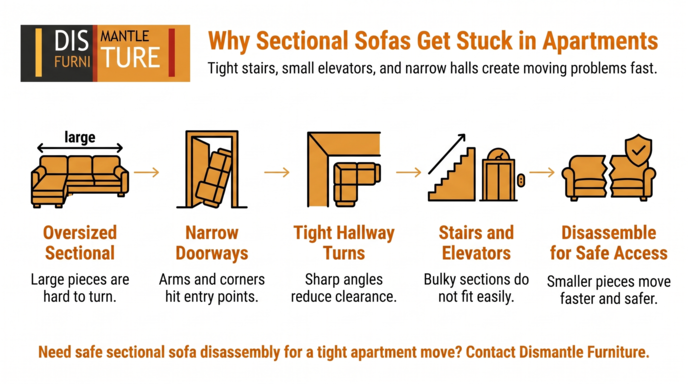
In condos and high-rise buildings, these choke points often appear in sequence, so one oversized piece can slow the entire move.
Can Sectionals Be Moved Without Damaging Walls or Furniture
Only when the route is measured, the sofa is protected, and the move is controlled from start to finish. Large sectionals cause damage when people rush, guess the angles, or try to muscle a bulky piece through spaces that need a more precise approach.
Protect the route
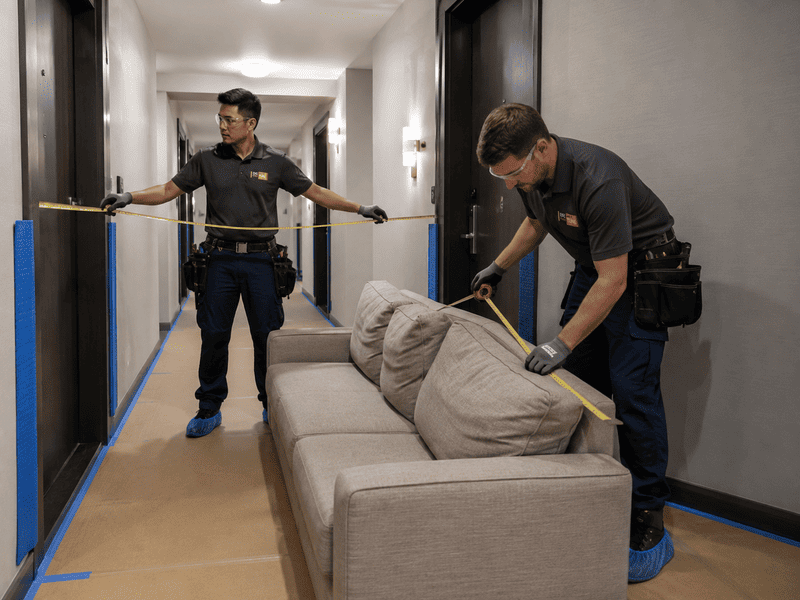
Door frames, hallway corners, elevator interiors, and stair railings should be padded before lifting begins. Experienced heavy item movers also control pace, communication, and hand placement so the sofa does not swing into finished surfaces.
Reduce friction points
Disassembly lowers bulk, improves visibility, and gives each carrier a safer grip, which makes clean transport much more realistic.
What Causes Delays During Sofa Moving and Disassembly
Most delays come from poor access planning, missing tools, unclear hardware storage, and last-minute attempts to move a sectional intact. Reviewing sofa disassembly pricing early also helps set realistic expectations for labor, complexity, and timing.
- No measurements for doors or elevators
- Hardware not bagged or labeled
- Building move windows not confirmed
- Parking and loading access ignored
- Teams trying multiple failed angles
In complicated buildings, careful relocation planning saves time because the route, sequence, and handling steps are decided before moving day pressure starts.
How Professional Disassembly Helps Prevent Damage and Injury
Professional disassembly reduces strain, protects the sofa’s structure, and keeps people from making risky lifts in cramped areas. Since sectionals vary in fastening systems, frame design, and weight distribution, safe handling should respect basic furniture safety requirements instead of relying on force.
Less strain
Technicians know where connectors sit, which pieces detach first, and how to avoid twisting frames or damaging upholstery during sofa disassembly and reassembly.
Better control
That control is especially valuable in apartments and condos where one slip can injure a mover or damage multiple surfaces at once.

Why Apartment and Condo Moves Require Extra Planning
Apartment and condo moves involve tighter routes, stricter rules, and less room for error than single-family homes. Dismantle Furniture can coordinate full moving support when a sectional move also needs timing, access, and protection planning.
- Reserve elevators and loading zones early
- Confirm move-hour restrictions with management
- Measure every doorway and turn point
- Protect floors, walls, and common areas
- Plan re-entry at the new unit
For larger transitions, some homeowners also look at broader relocation services when disassembly is only one part of a more complex move.
What Mistakes Make Large Sofa Moves More Difficult
The biggest mistakes are skipping measurements, removing the wrong parts first, and assuming a sectional will fit because it came into the room once. Apartment layouts, upgraded railings, and new elevator padding can change the usable path.
- Taking cushions off but leaving bulky arms attached
- Forgetting sharp turns near stair landings
- Mixing hardware from different sections
- Underestimating recliner or sleeper weight
- Waiting until movers arrive to test clearance
These small mistakes often create the biggest delays because they force rushed decisions under pressure.
How to Prepare a Sectional Sofa for Moving Day
Good preparation shortens the move, lowers stress, and makes disassembly more efficient. Before the team arrives, review basic moving day preparation so the route is clear and the sofa can be worked on safely.
- Remove throws, pillows, and loose cushions
- Empty nearby shelves and wall decor
- Clear hallways, entries, and stair landings
- Photograph the sofa before work begins
- Keep pets and children away from the route
If the sofa will be rebuilt in the new apartment or condo, scheduling sectional sofa reassembly ahead of time helps the setup go faster once the pieces arrive.
Get Your Sectional Sofa Disassembled and Moved Safely
Make the move easier
If your sectional has to get through a tight apartment hallway, condo elevator, or narrow staircase, Dismantle Furniture can help you avoid wall damage, protect the sofa, and keep moving day on track. Reach out now to schedule professional sectional disassembly and safer transport. After the move, some customers also explore space planning ideas for better organization or basketball hoop ongoing maintenance help for other home and commercial equipment and setup needs.
Frequently Asked Questions About Sectional Sofa Disassembly Services
How long does sectional sofa disassembly usually take?
Most sectional sofa disassembly jobs take 30 minutes to 90 minutes, depending on size, hardware, and access conditions. Reclining or sleeper sectionals usually take longer because they have heavier components and more connection points.
Can a sectional fit through an apartment doorway without disassembly?
Sometimes, but many sectionals still get stuck at hallway turns, stair landings, or elevator doors even if they clear the main doorway. Measuring first is the only reliable way to know.
How do movers protect walls and hallways during a sectional move?
Professionals typically use padding, controlled lifting angles, and slow coordinated movement through tight areas. They also plan the route in advance so there is less stopping, dragging, and repositioning.
How much does sofa disassembly cost?
Pricing depends on sectional size, sofa design, building access, and whether reassembly is needed after the move. Apartments and condos with stairs, long hallways, or elevator coordination may increase labor time.
Can a sectional sofa be reassembled after moving?
Yes, most sectionals can be reassembled after the move as long as the hardware is organized and the parts are handled correctly. Professional reassembly also helps restore stability and alignment.
Is sectional disassembly worth it for condo and high-rise moves?
In most cases, yes. Disassembly reduces damage risk, improves safety, and makes tight access much easier in buildings with elevators, narrow hallways, and restricted moving windows.
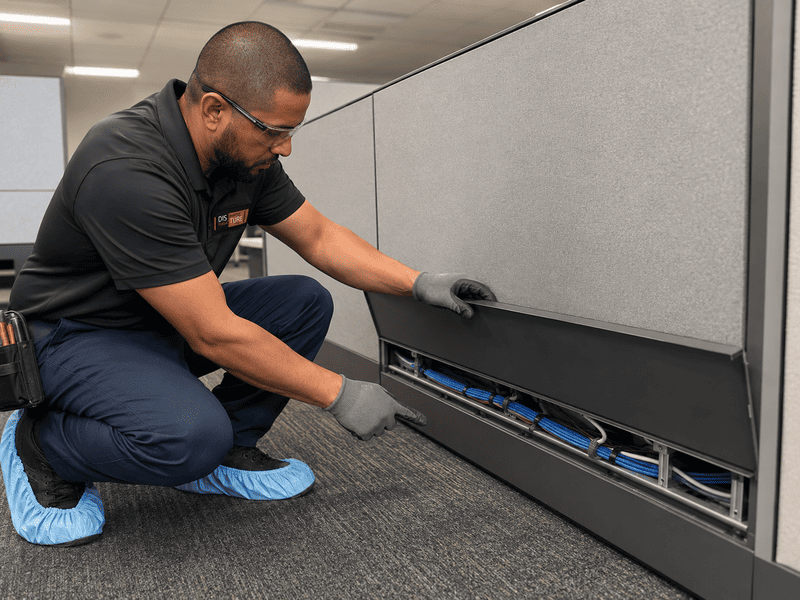
Reconfigure Your Modular Office Layout Flawlessly with Our Professional Cubicle Breakdown and Repair